 183 North
More Than a Mobility Project
The 183 North Mobility Project is complete. This project's goal was to improve mobility, reduce congestion and provide more reliable travel times for transit and emergency responders. But it was also about more than that. From day one, our commitment was to deliver a mobility project while remaining a good neighbor to the community, including the nearby businesses, residents and travelers who rely on the corridor every day.
Throughout construction, the project team focused on these key priorities:
-
Keep the community and our crew safe
-
Keep businesses open
-
Keep residents connected and informed
-
Keep the community moving
Putting those commitments into action required close coordination across the corridor. Our contractor, Great Hill Constructors, crews performed significant nighttime construction to help reduce impacts on drivers during peak travel times. As a part of bringing ADA compliant sidewalks to the region, more than 200 business driveways were reconstructed, and the team worked directly with business owners to maintain access and share timely information throughout construction.
Today, the corridor is delivering on its purpose: helping improve mobility, enhancing connectivity, and providing more transportation options for the community. Residents have shared that their commutes are now up to 10 minutes faster, and travelers can take advantage of new ways to move through the corridor.
Projects of this scale take time, patience, and partnership. We appreciate the community's support throughout construction and hope these improvements continue to make daily travel more reliable for years to come.
Watch the project recap video to hear from community members, business owners, and project partners who experienced the transformation of the corridor and helped make the 183 North Mobility Project a success.

Community Corner
Over the life of the 183 North Mobility Project, community outreach has gone beyond project updates. It has been about building relationships, listening to residents, and celebrating the people and organizations that make Austin a great place to live and work. Whether through attending and hosting festivals and events, school and neighborhood outreach, farmers' markets, or our Community Cultivators initiative honoring educators, first responders, healthcare workers, and other everyday heroes, the project team has been proud to be an active part of the community.
We are grateful for the many conversations, partnerships, and memories made along the way and look forward to continuing to serve the communities connected by the 183 North Mobility Project.

To see where we were in the community over the past five years, take a look at our Community Outreach Page.
If You Haven't Yet, Check Out Our Express Lanes Guide
Since opening in early 2026, the 183 North Express Lanes are giving travelers a new option to help make their trip more reliable.
The express lanes are separated from the US 183 general-purpose lanes and include two lanes both northbound and southbound in the center along US 183 between SH 45 North and MoPac, as well as a direct connector structure between US 183 and MoPac in both directions, and a collector distributor road that acts as a signal bypass along the southbound MoPac frontage road between US 183 and Far West Blvd.
These key improvements bring more travel reliability and overall improved mobility for this highly trafficked Northwest Austin corridor and provide a key link for drivers wishing to travel between downtown Austin and north to Cedar Park, Leander and beyond.
Drivers who pay with an electronic tag pay the lowest rates.
The Mobility Authority currently accepts NTTA’s TollTag, HCTRA’s EZ TAG, CCRMA’s Fuego Tag, Kansas Turnpike Authority’s K-Tag, Oklahoma Turnpike Authority’s Pikepass, Florida Turnpike Enterprise’s SunPass, E-470’s ExpressToll, and BancPass/PlusPass. The Mobility Authority also accepts TxTag which is now operated by HCTRA. The Mobility Authority is continuously working to become interoperable with other agencies.
Drivers who don’t have a tag account will still be able to use the tolled lanes and will be billed through the Mobility Authority’s Pay By Mail program. Cameras will capture a photo of the vehicle’s license plate and a toll bill will be mailed to the address on file with the Department of Motor Vehicles.
The 183 North Mobility Project will manage the number of cars in the express lanes at any given time using variable toll pricing. When traffic is heavy in the express lanes, demand is high and toll rates increase. When demand is low, toll rates decrease. Higher rates control congestion by discouraging drivers from entering the express lanes and ensures a reliable trip for transit, emergency services vehicles and drivers, when they really need it. Prices are displayed on electronic signs before each entrance so drivers can decide whether to use the express lanes or remain in the general-purpose lanes.
Whether you're commuting to work, heading to an appointment, or simply looking for a more predictable trip, the express lanes provide an additional travel choice for getting where you need to go.
Learn more about using the 183 North Express Lanes at: Express Lanes Guide
Farewell, Dozer!
If you’ve followed the 183 North social media channels over the years, chances are you’ve met Dozer. Whether he was sharing travel updates, highlighting fun facts, or popping up with a friendly reminder, Dozer became a familiar face and trusted travel companion along the way. While every good journey eventually reaches its destination, Dozer’s final adventure on 183 North is here. We’d like to thank everyone who followed along, engaged with his posts, and welcomed his perspective into your feeds.
While the 183 North Mobility Project is substantially complete, community members may still see crews working along the corridor as they wrap up final punch list items and project closeout activities. We appreciate your continued patience as these last details are completed.

Project Completion Photos
-
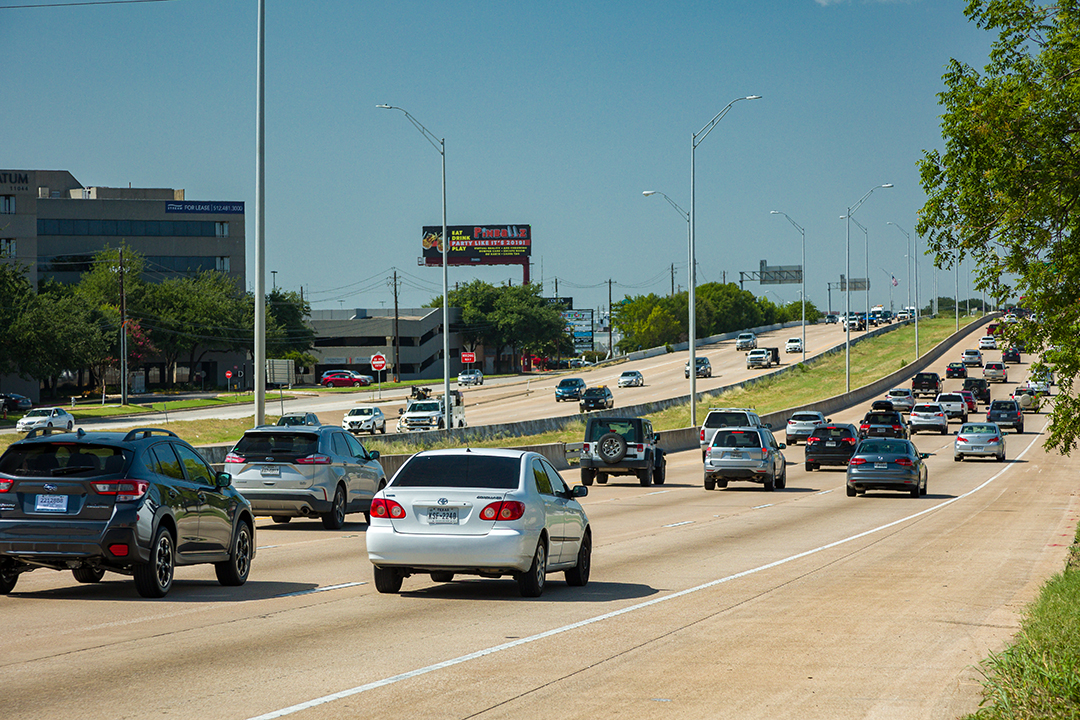
(4th Lane: Before) - Ground-level view of the 183 North corridor before the fourth lane was added. The highway carries heavy traffic across three travel lanes in each direction, separated by a grassy median. Billboards, streetlights, and trees line the corridor. The photo illustrates corridor conditions before the addition of a fourth lane.
-
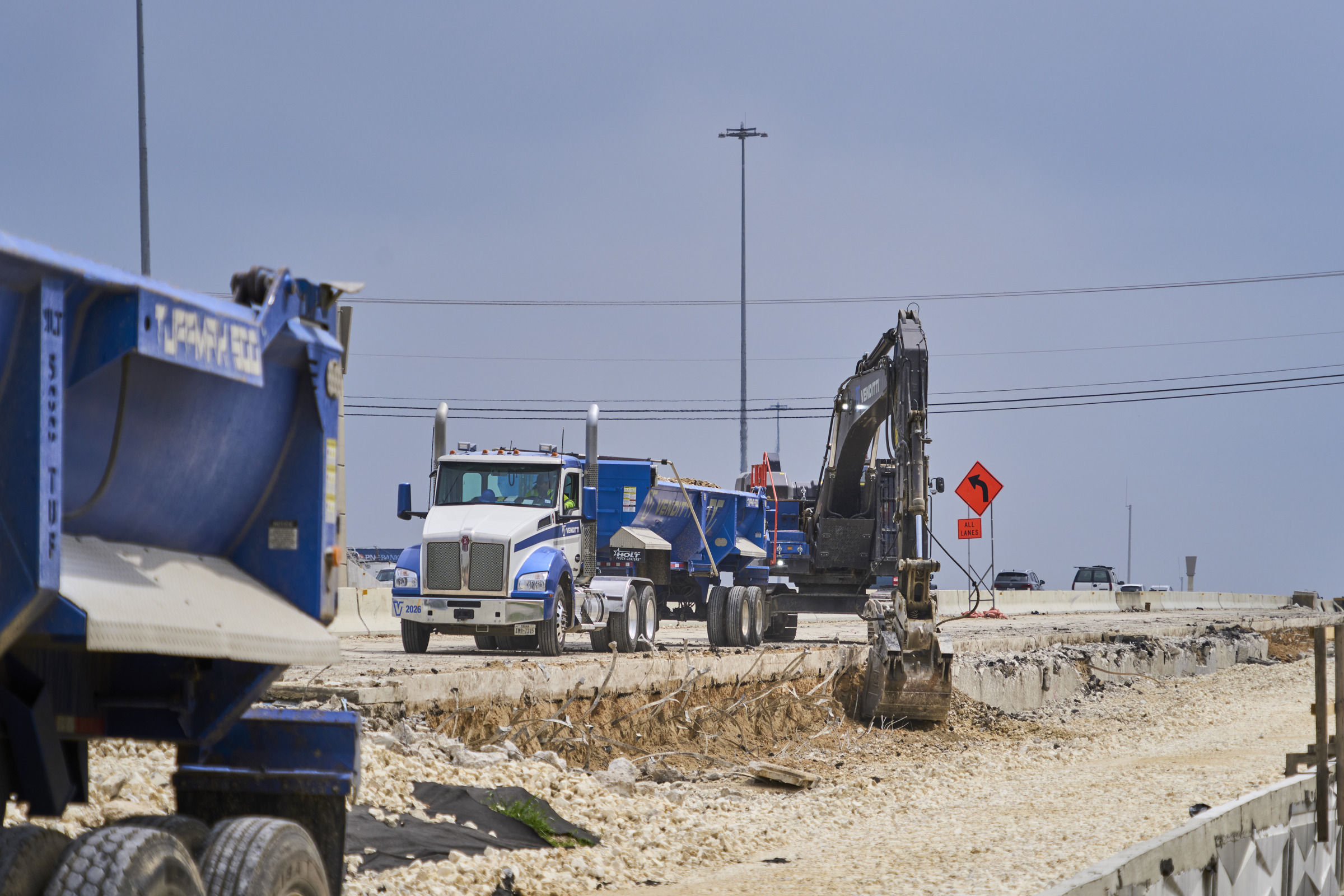
(4th Lane: During - Excavation) - Ground-level view of 183 North Mobility construction work. A large excavator is breaking up and removing a section of concrete pavement while a few blue dump trucks are positioned nearby to haul materials. The work is covered with crushed rock, with temporary traffic control signage and concrete barriers separating construction from adjacent traffic lanes. Utility poles and overhead wires are visible in the background under clear daytime conditions.
-
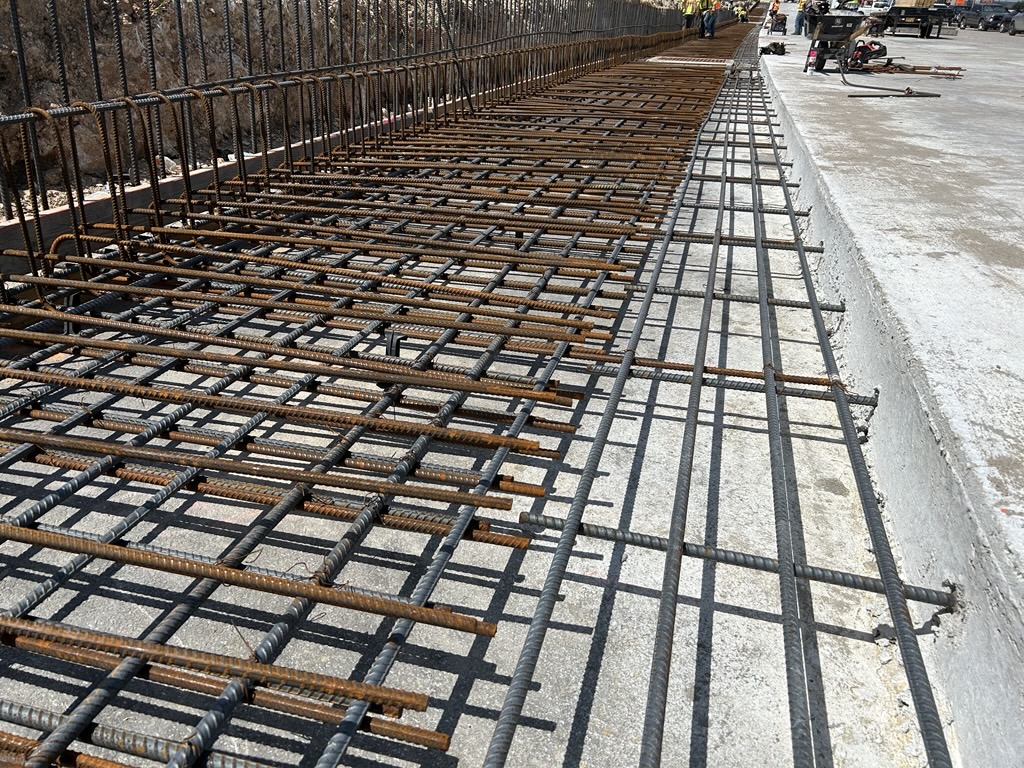
(4th Lane: During - Rebar) - Close-up view of steel reinforcing bars (rebar) installed for roadway widening along the 183 North corridor. A dense grid of steel reinforcing bars extendes along the edge of the existing roadway, forming the structural framework for a new lane. The rebar is positioned alongside completed pavement, with construction equipment, materials, and workers visibible farther down the project area. The photo illustrates a key stage of roadway widening before concrete placement for the additional travel lane.
-
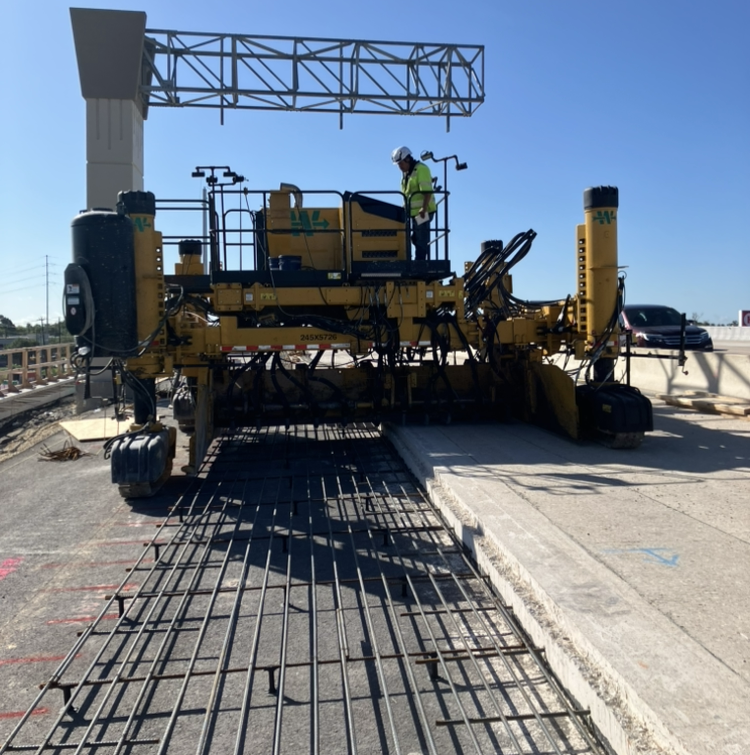
(4th Lane: During - Roadway Paving) - Roadway paving equipment positioned over a newly installed rebar grid during construction of the fourth lane of the 183 North Mobility Project. The paving machine covers the future lane area wile workers prepare for concrete placement. Other construction materials are visible in the distance, with an empty overhead highway sign structure spanning the roadway.
-
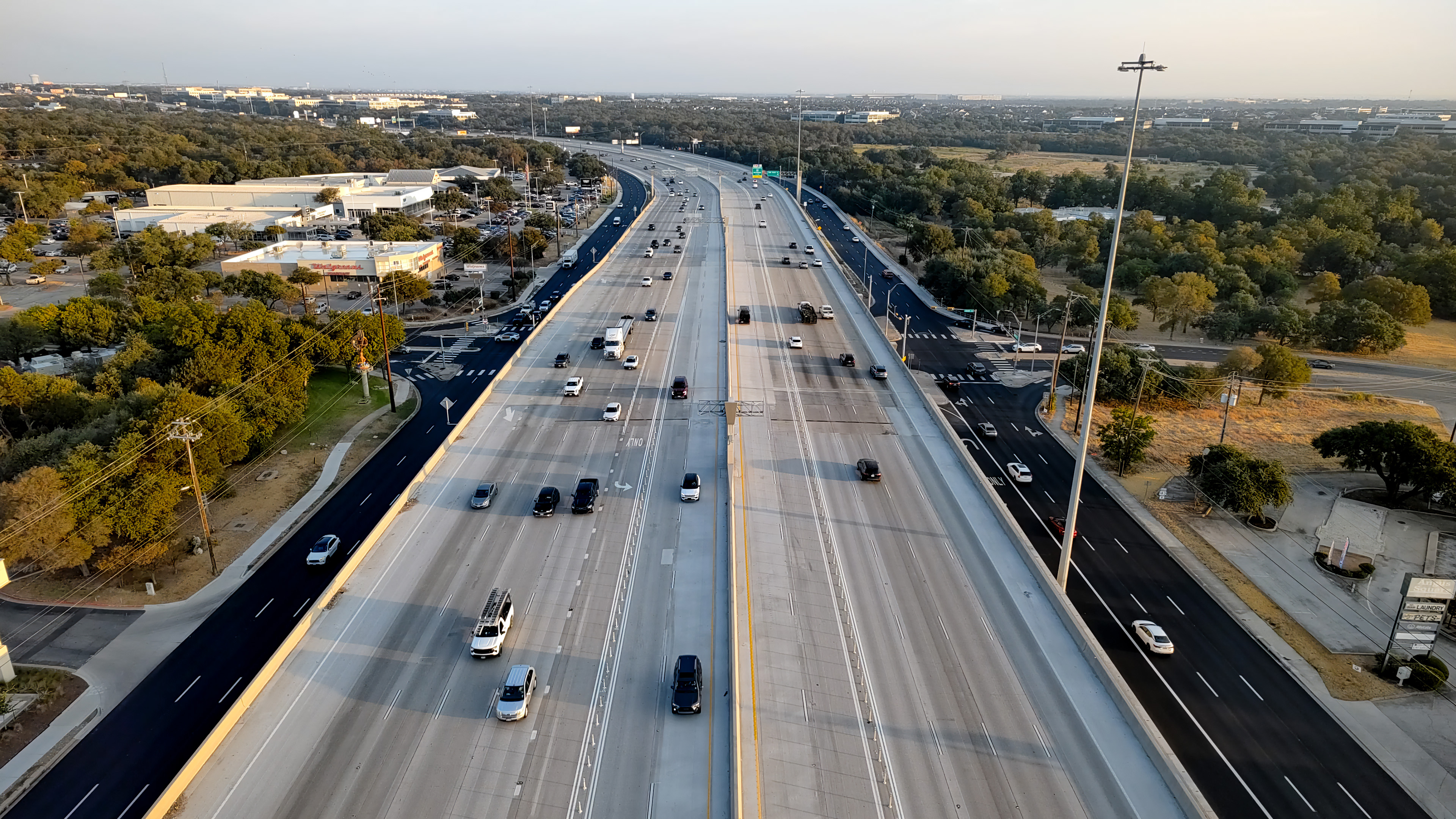
(4th Lane: After) - Aerial view of the completed 183 North corridor showing four general-purpose lanes in each direction, separated express lanes in the center, and frontage roads on both sides. Vehicles travel along the widened roadway, illustrating the added capacity provided by the project.
-
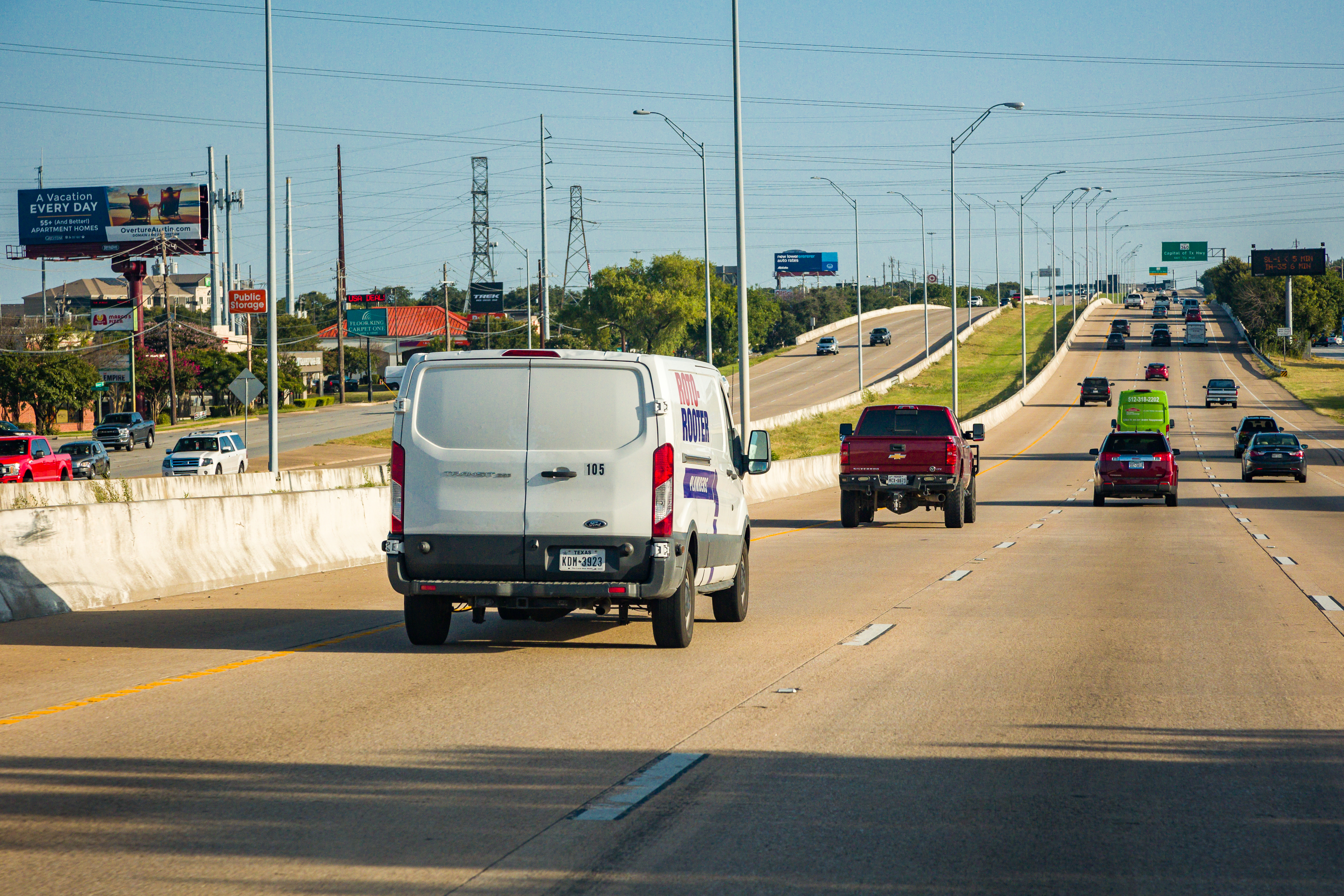
(Express Lane: Before) - Ground-level view of the 183 North corridor before express lane construction, showing three general-purpose lanes carrying moderate traffic in each direction. A white utility van, passenger vehicles, billboards, utility lines, and commercial development are visible along the corridor.
-
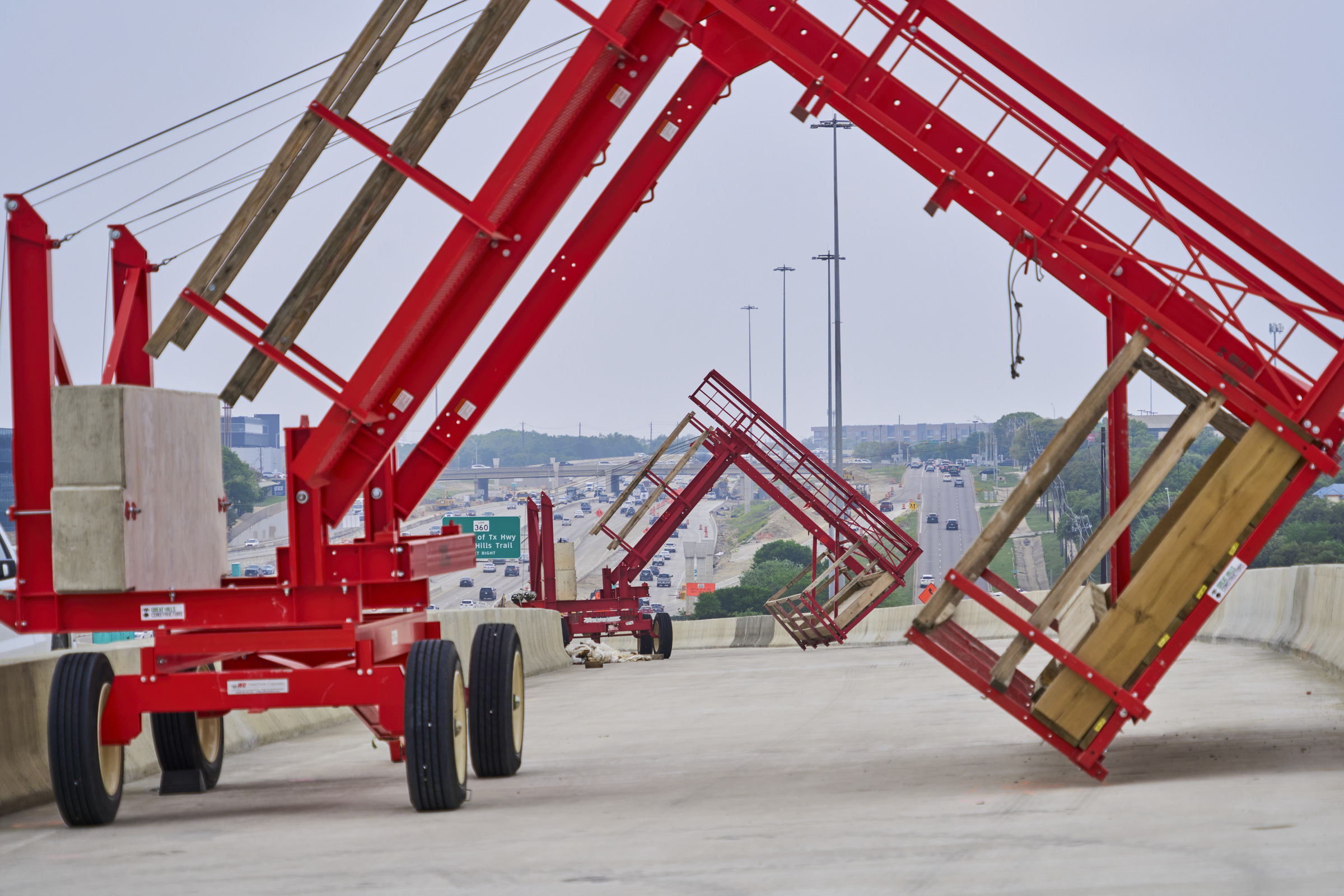
(Express Lane: During - Red Steel Structures) - Construction view of the 183 North express lanes showing red steel structures positioned along a newly constructed roadway segment. Concrete barriers line the corridor, with active traffic and highway infrastructure visible in the background.
-
.jpg)
(Express Lane: During - Excavation) - Ground view of future express lane during construction, showing an excavated and graded roadway section between existing highway structures. Heavy equipment tire tracks cover the prepared soil surface.
-
.jpg)
(Express Lane: During - Steel Rebar Grid) - View of express lane construction along the 183 North Mobility Project showing a newly installed steel rebar grid between concrete barriers and active traffic lanes. Vehicle travel on adjacent lanes while construction activity progresses under clear skies.
-
.jpg)
(Express Lanes: During - Steel Reinforcing Bars) - Construction workers install and adjust steel reinforcing bars within the future express lane roadway section on the 183 North Mobility Project. The rebar grid is positioned between existing concrete pavement and temporary barriers.
-
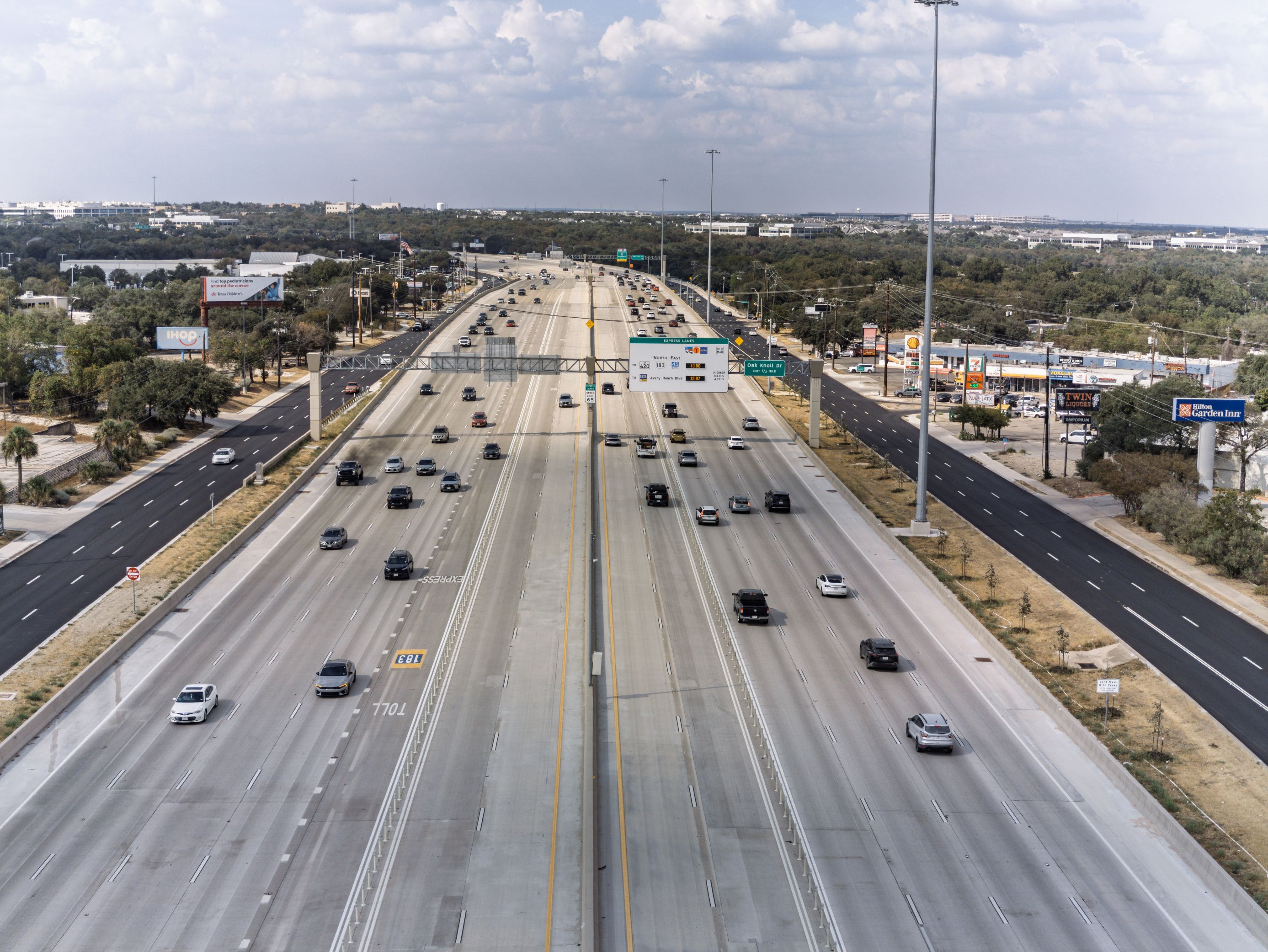
(Express Lanes: After) - Aerial view of the 183 North Mobility corridor showing multiple lanes of traffic traveling in both directions near the Oak Knoll Dr. exit. The roadway includes separated express lanes in the center in general purpose lanes and frontage roads on either side. Commercial businesses, utility lines, and shrubbery line the corridor. The sky is partly cloudy and traffic is moving steadily.
-
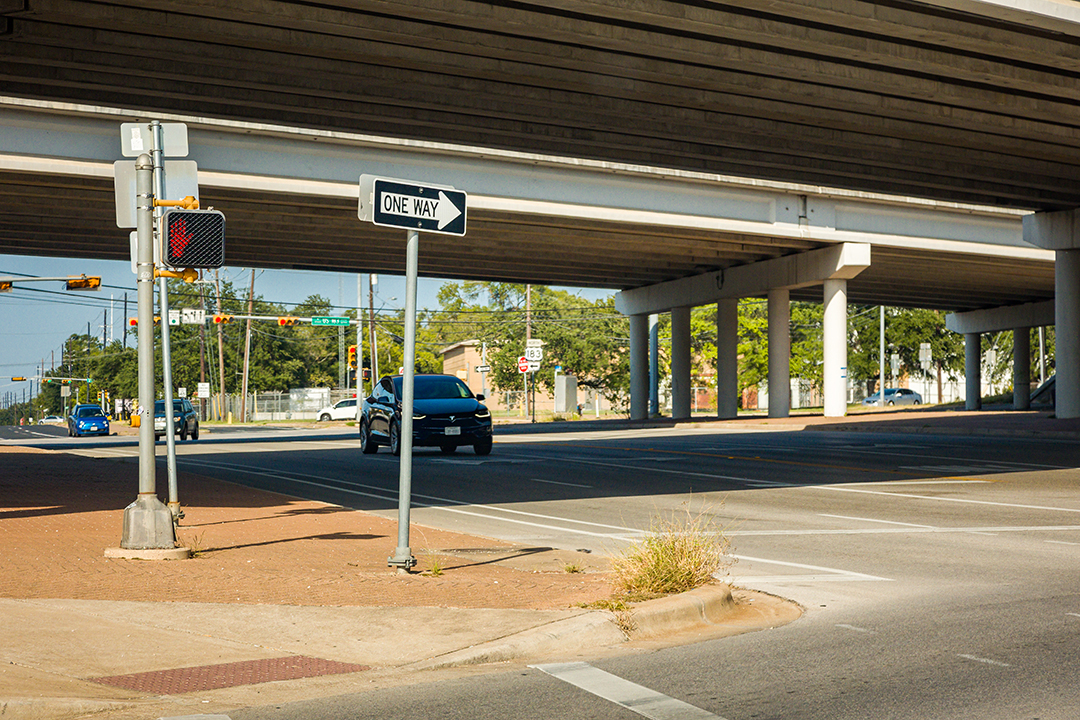
(Walls & Bridges: Before) - Ground-level view of an existing roadway underpass along the 183 North corridor before construction. Vehicles travel through the intersection beneath an elevated highway structure supported by concrete columns. Sidewalks, traffic signals, and directional signage are visible.
-
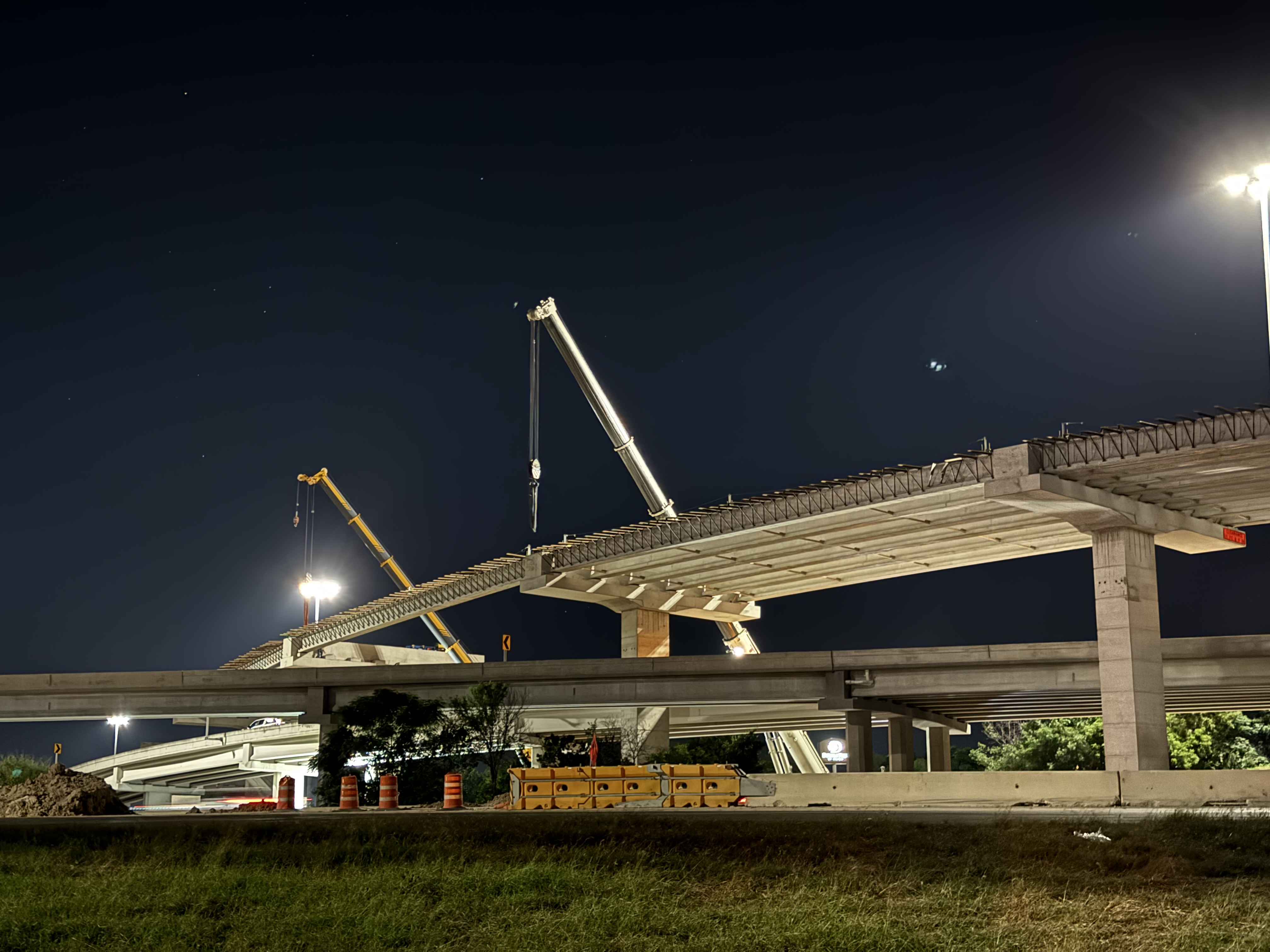
(Walls & Bridges: During - Nighttime Construction) - Nighttime construction of an elevated bridge structure along the 183 North Mobility corridor. Large cranes are positioned beside the partially completed bridge while crews work to place structural bridge elements. Highway ramps, barriers, and work-zone lighting surround the active construction site.
-
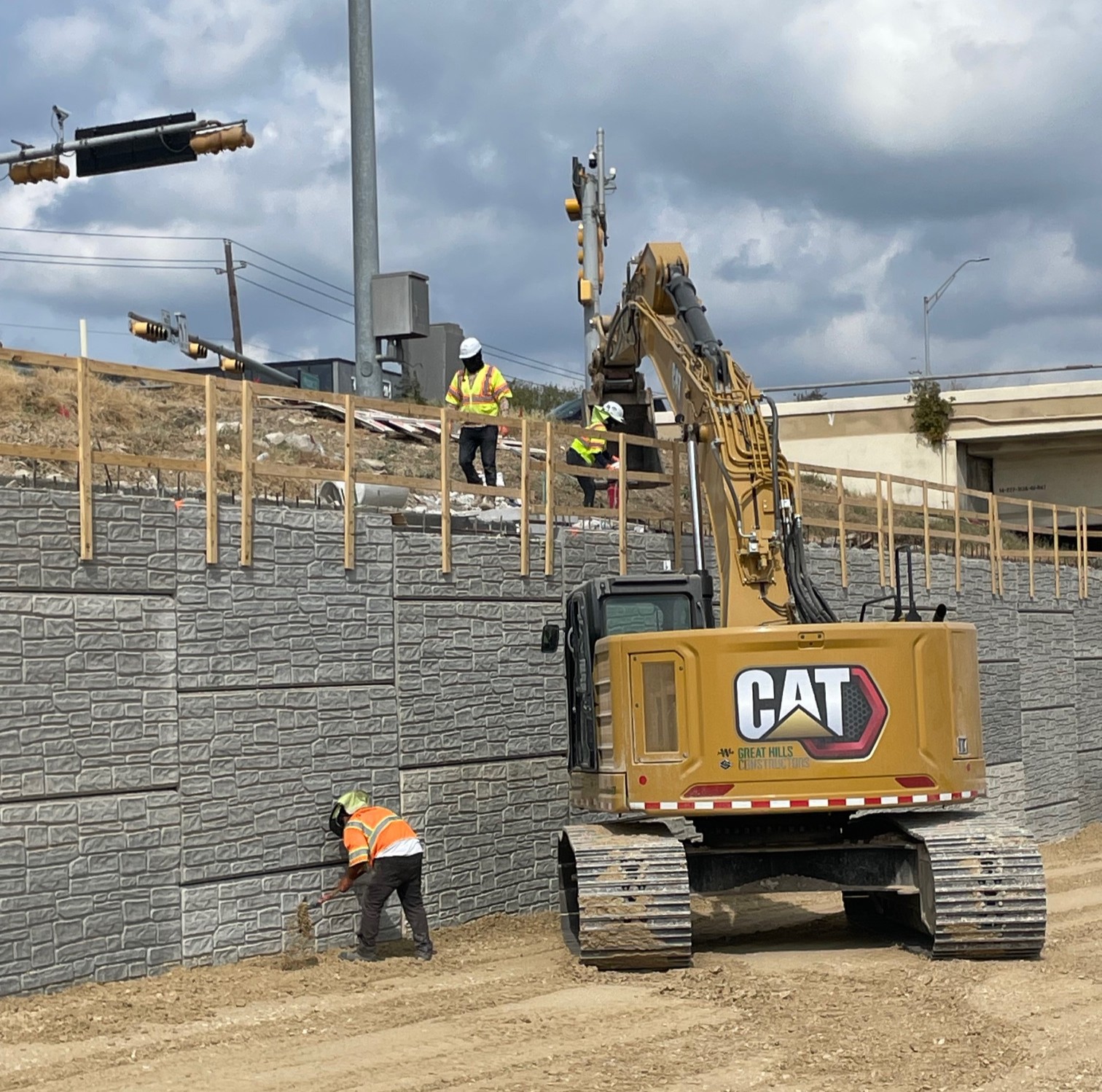
(Walls & Bridges: During - Wall Components Installation) - Construction crews build a decorative retaining wall along the 183 North Mobility Project. Workers install wall components while an excavator operated nearby on site. The retaining wall extends alongside the roadway, with traffic signals and utility infrastructure visible in the background.
-
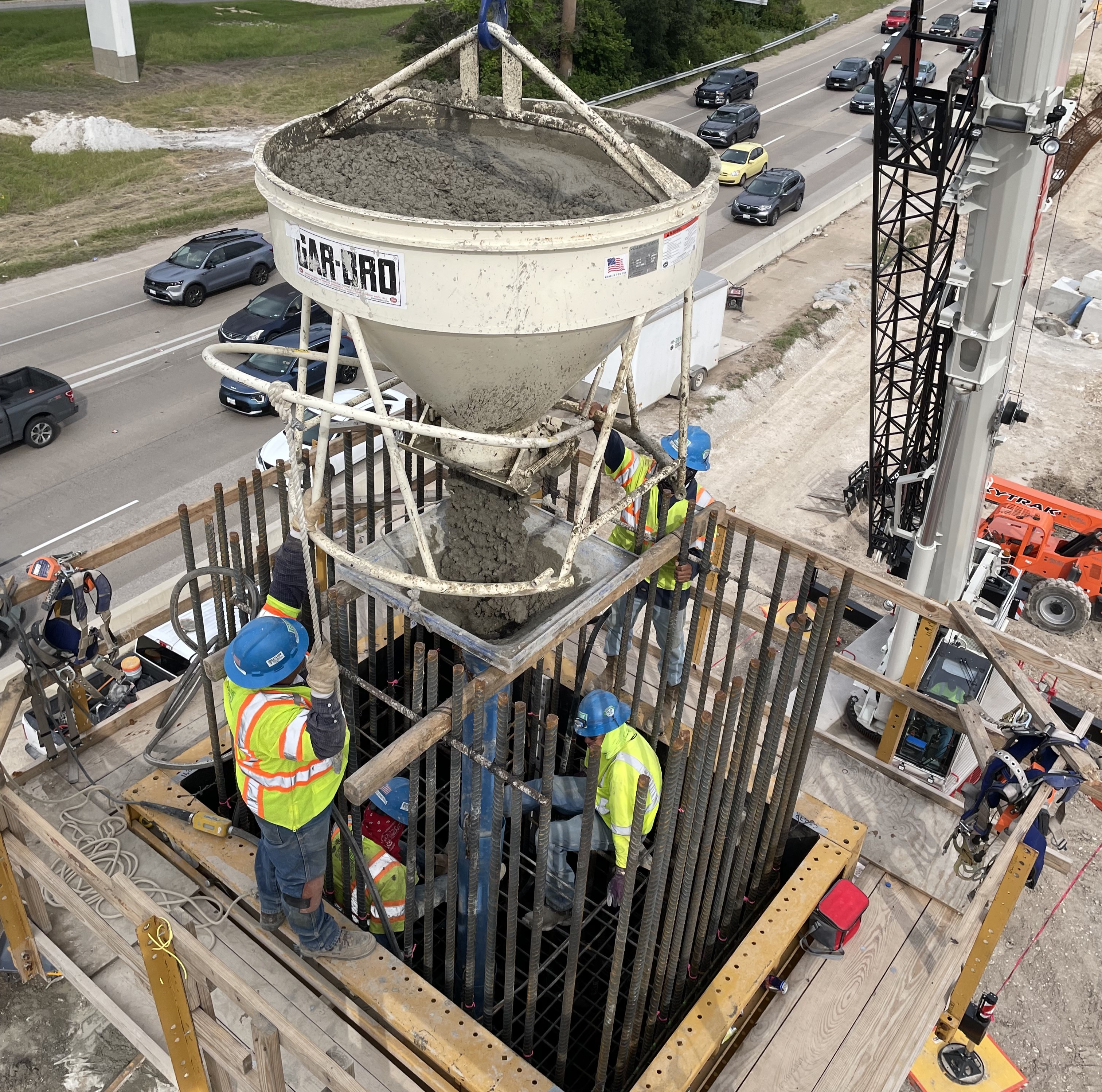
(Walls & Bridges: During - Mass Column Construction) - Aerial view of mass column construction within the 183 North Mobility Project. Construction crews place concrete into a large reinforced column foundation using a crane-supported concrete bucket. Steel reinforcing bars extend vertically from the ground while workers guide concrete placement. Active traffic and interchange ramps surround the work zone.
-
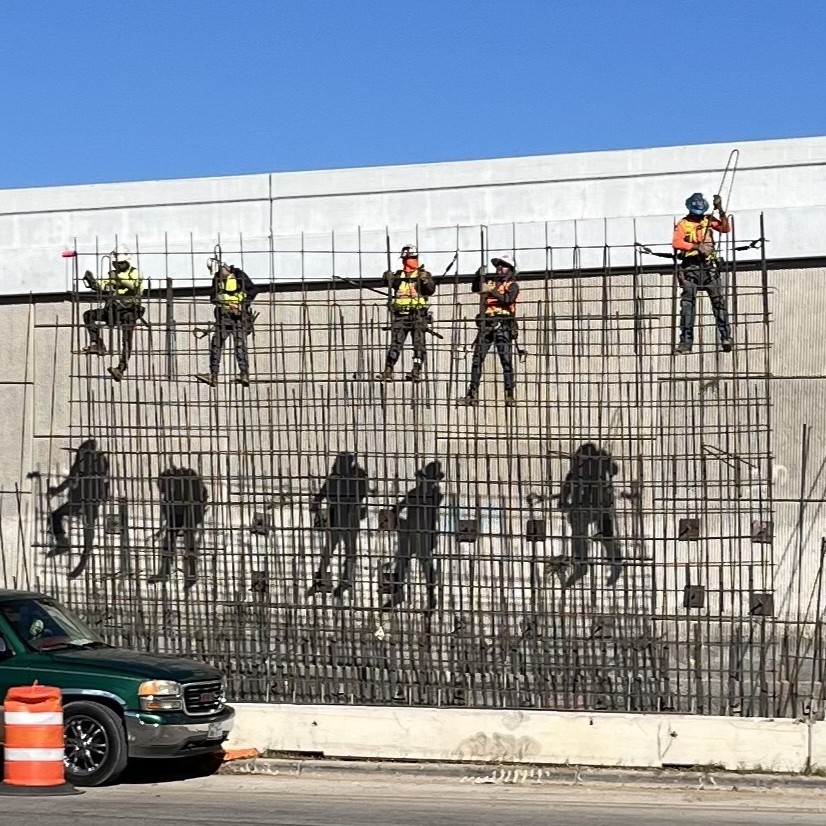
(Walls & Bridges: During - Steel Reinforcement) - Construction workers install steel reinforcing bars for a sound wall along the 183 North Mobility corridor. Crews are positioned on a vertical rebar framework in front of a completed retaining wall, preparing the structure for concrete placement. Vehicles travel on the roadway above the work area.
-
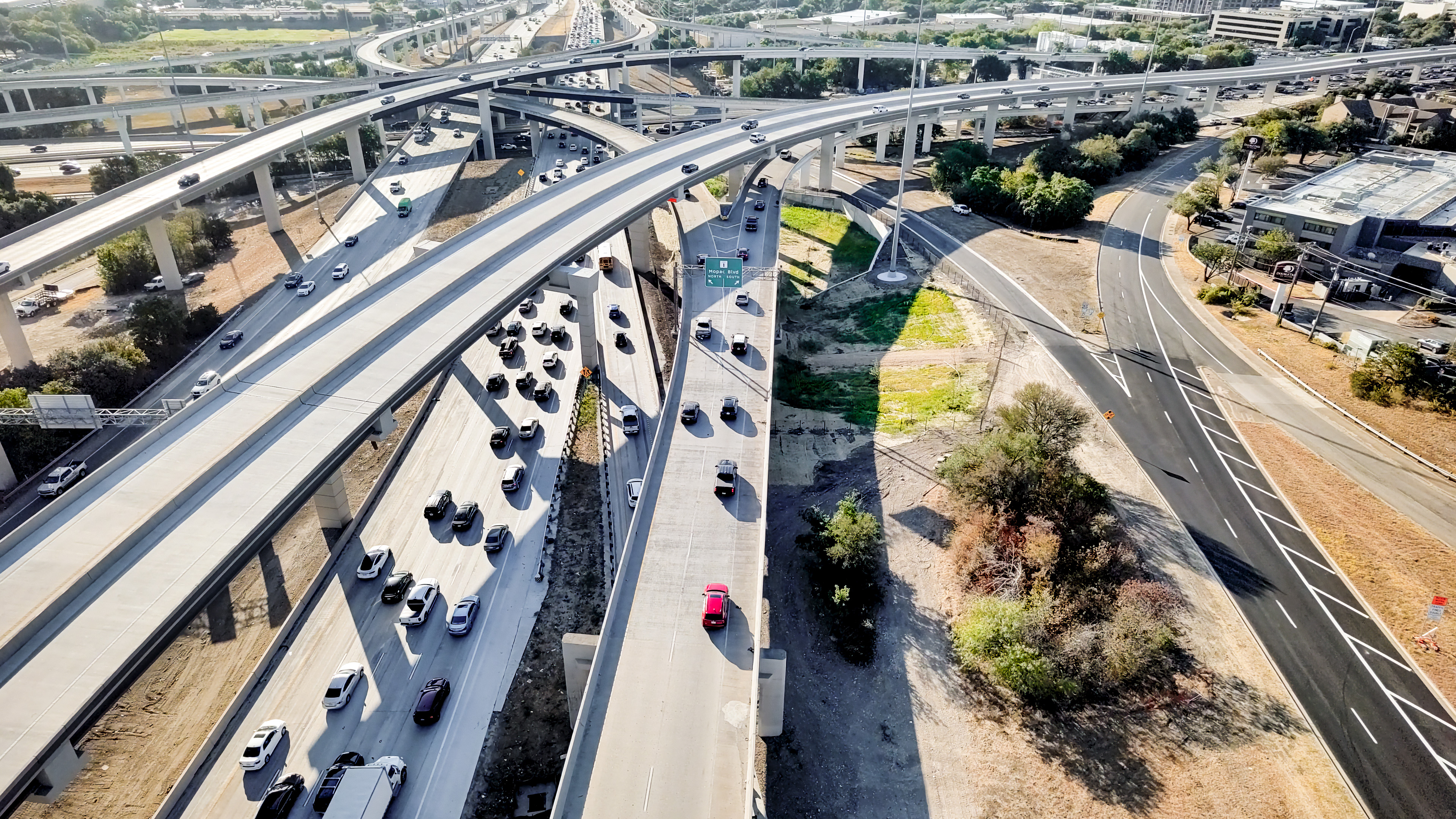
(Walls & Bridges: After) - Aerial view of the completed 183 North Mobility interchange showing elevated flyover ramps, collector-distributor roads, and multiple roadway connections carrying traffic through the corridor. Vehicles travel on several levels of completed transportation infrastructure designed to improve mobility and connectivity.
-
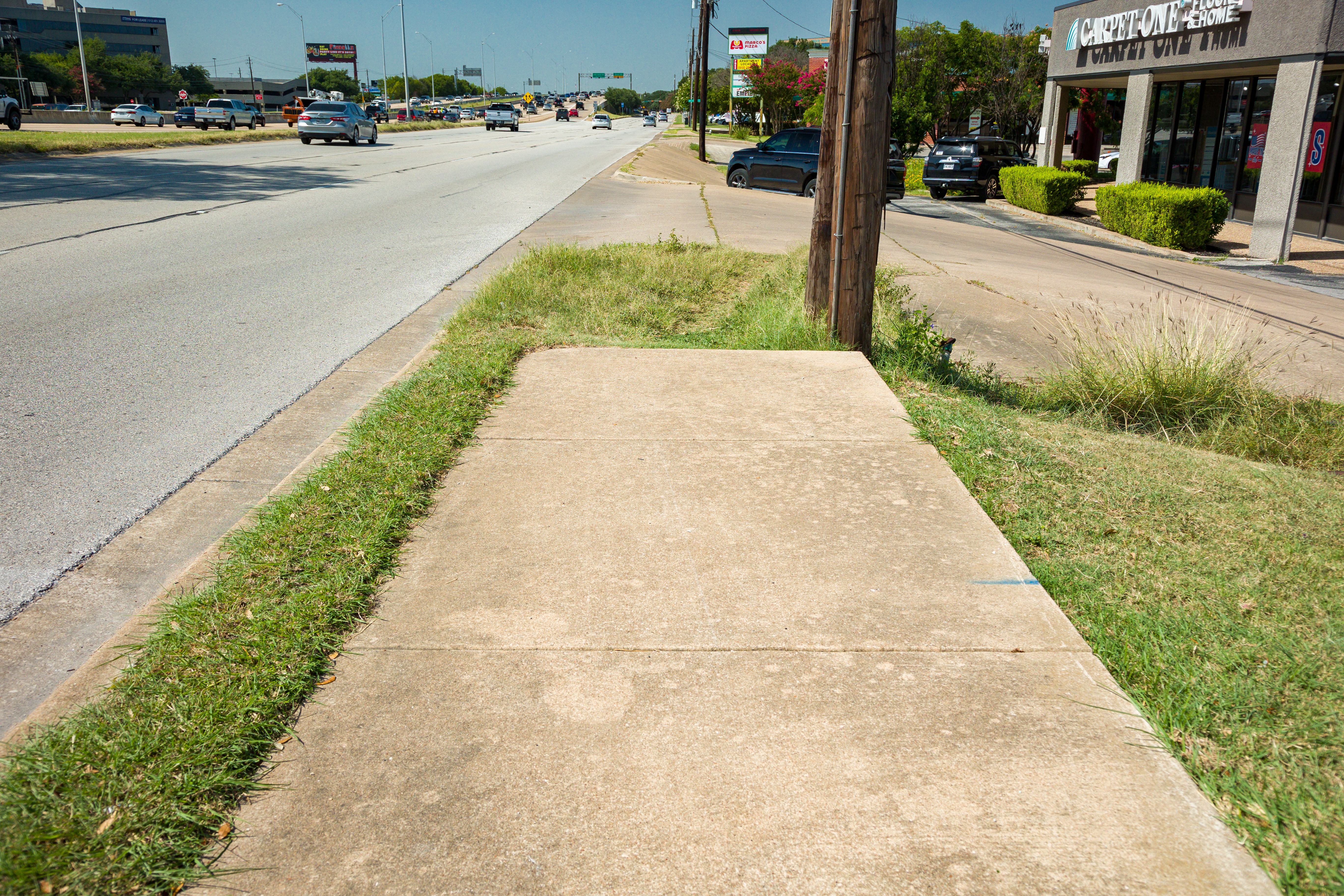
(Sidewalks: Before - Sidewalk) - Ground-level view of the future direct connector location on the 183 North Mobility Project. Existing roadway infrastructure, vehicles, and open construction staging areas are visible around bridge support structures. The photo documents early conditions during installation of the elevated direct connector.
-
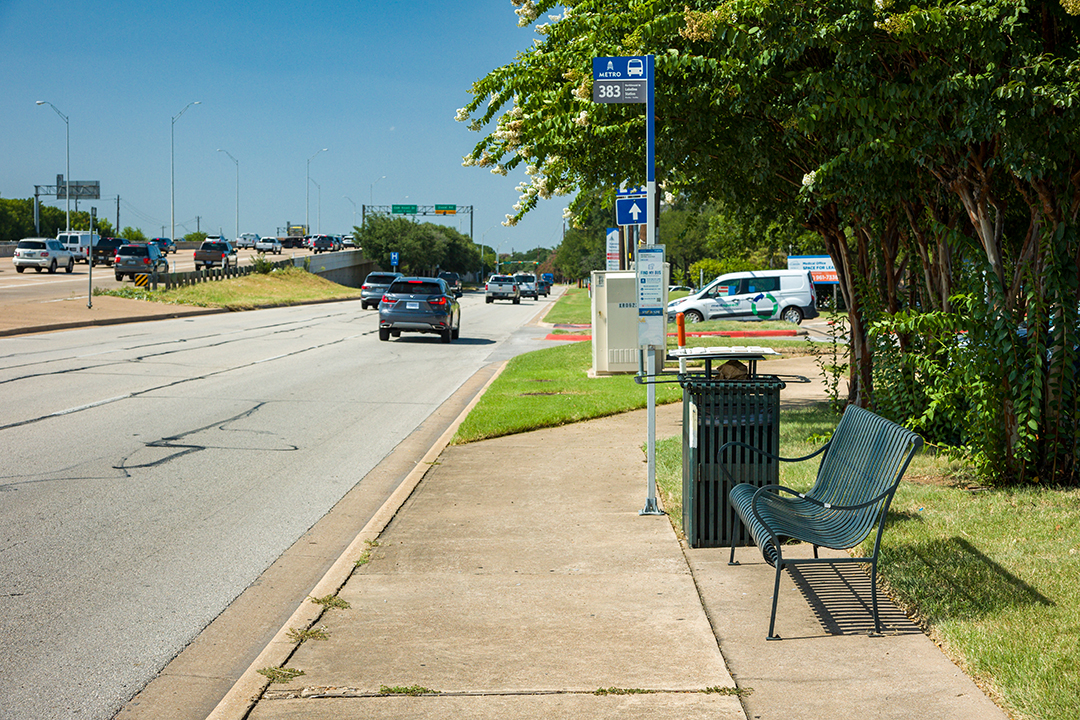
(Sidewalks: Before - Bus Stop) - View of a bus stop and sidewalk along the 183 North corridor before construction. A green transit bench, bus stop sign, black trash can, and narrow sidewalk are located beside a high-traffic corridor.
-
_cropped.jpg)
(Sidewalks: During - Curved Concrete) - Construction of a new sidewalk near Balcones Club along the 183 North Mobility Project. Wooden forms outline a curved concrete sidewalk section adjacent to the roadway, while traffic barrels and temporary barriers separate the work zone for active traffic. The photo shows preparation for new ADA-accessible sidewalks during construction.
-
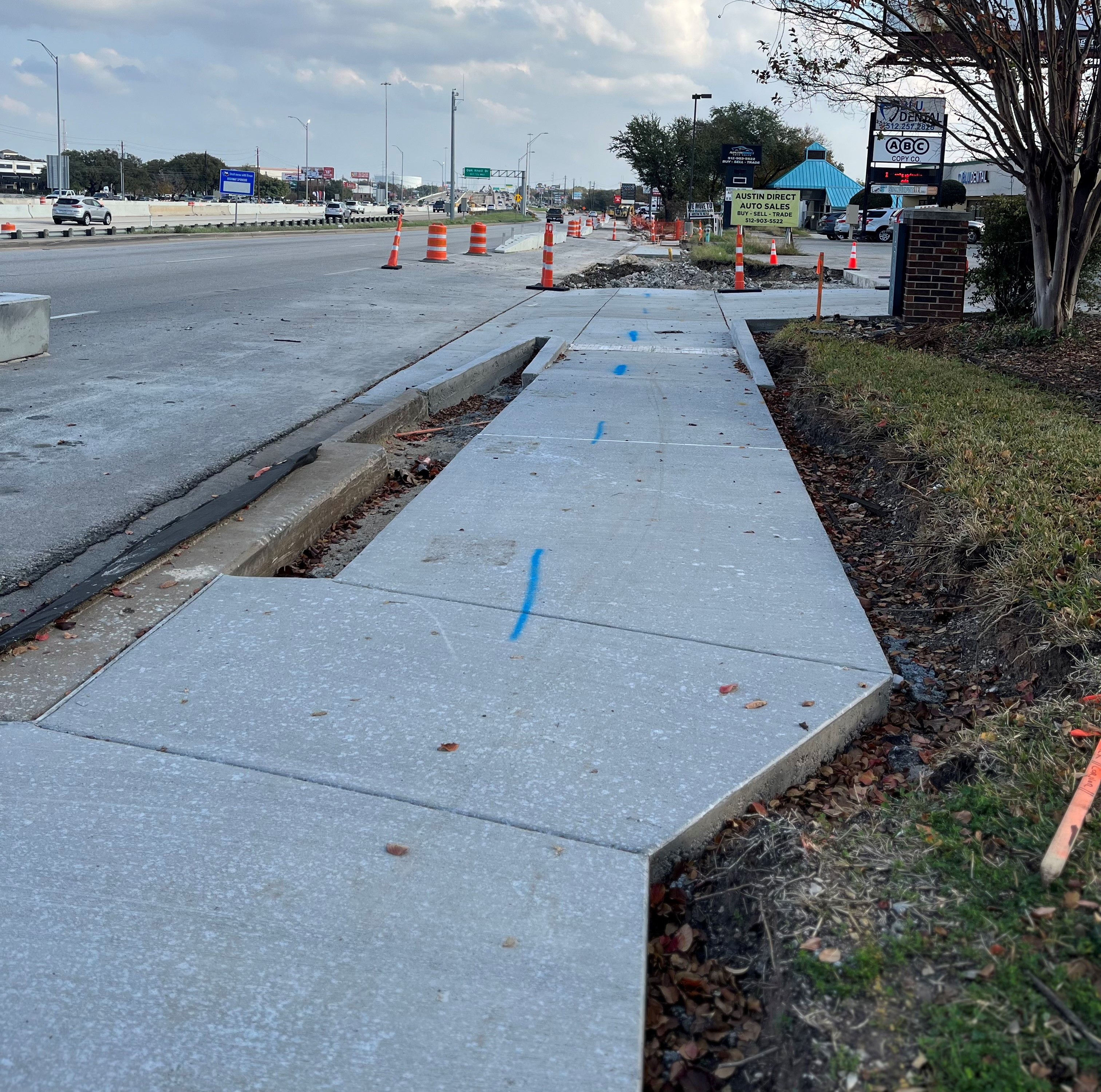
(Sidewalks: During - New Concrete) - Daytime view of driveway reconstruction work adjacent to a sidewalk along the 183 North Mobility corridor. Newly constructed concrete pedestrian facilities run alongside the roadway while workers reconstruct driveway access and install supporting infrastructure. Traffic control devices, barriers, and active traffic are visible nearby.
-
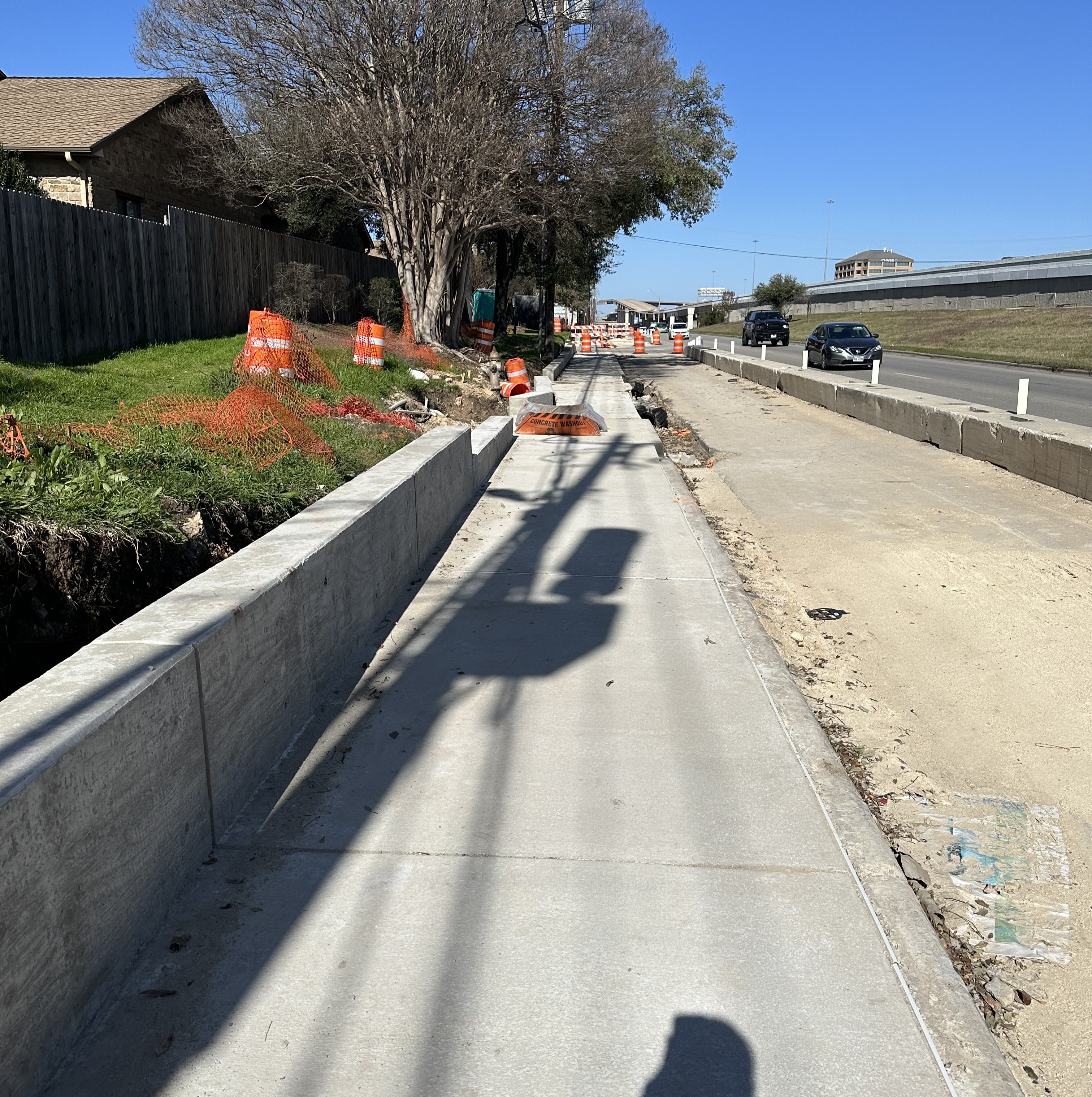
(Sidewalks: During - Sidewalk Next to Roadwork) - New sidewalk construction along the 183 North Mobility corridor during daytime hours. A recently poured concrete sidewalk runs parallel to the roadway while orange traffic barrels and temporary traffic control devices protect the work zone. Excavation and utility work are visible ahead of the completed sidewalk section, with active traffic located to the right of the sidewalk.
-
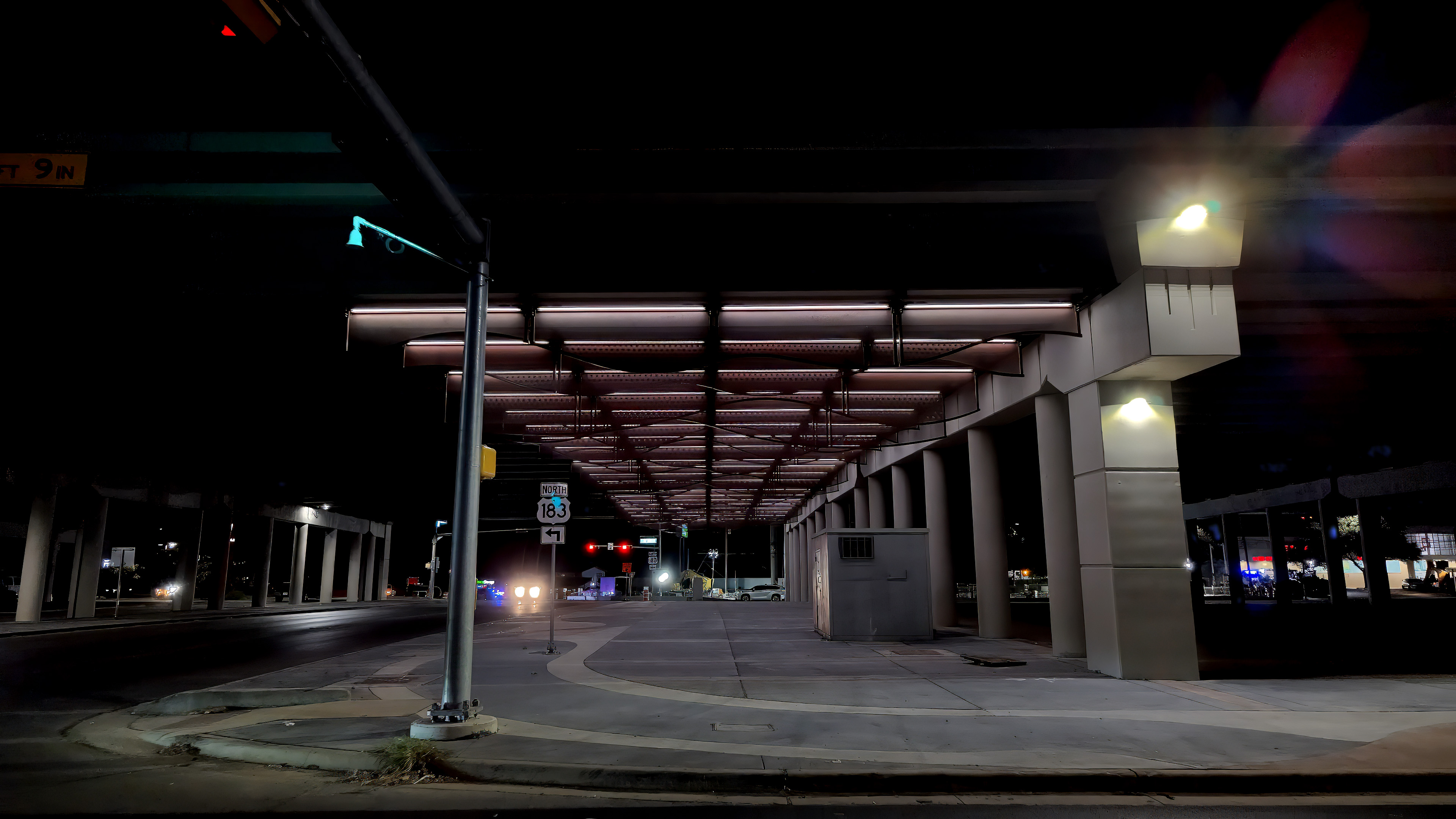
(Sidewalks: After - Shared-use Path) - Completed shared-use path along the 183 North Mobility Project featuring newly installed crossing panels and accessible pedestrian facilities. The concrete path is separated from adjacent traffic by barriers and landscaping, providing a dedicated route for pedestrians.
-
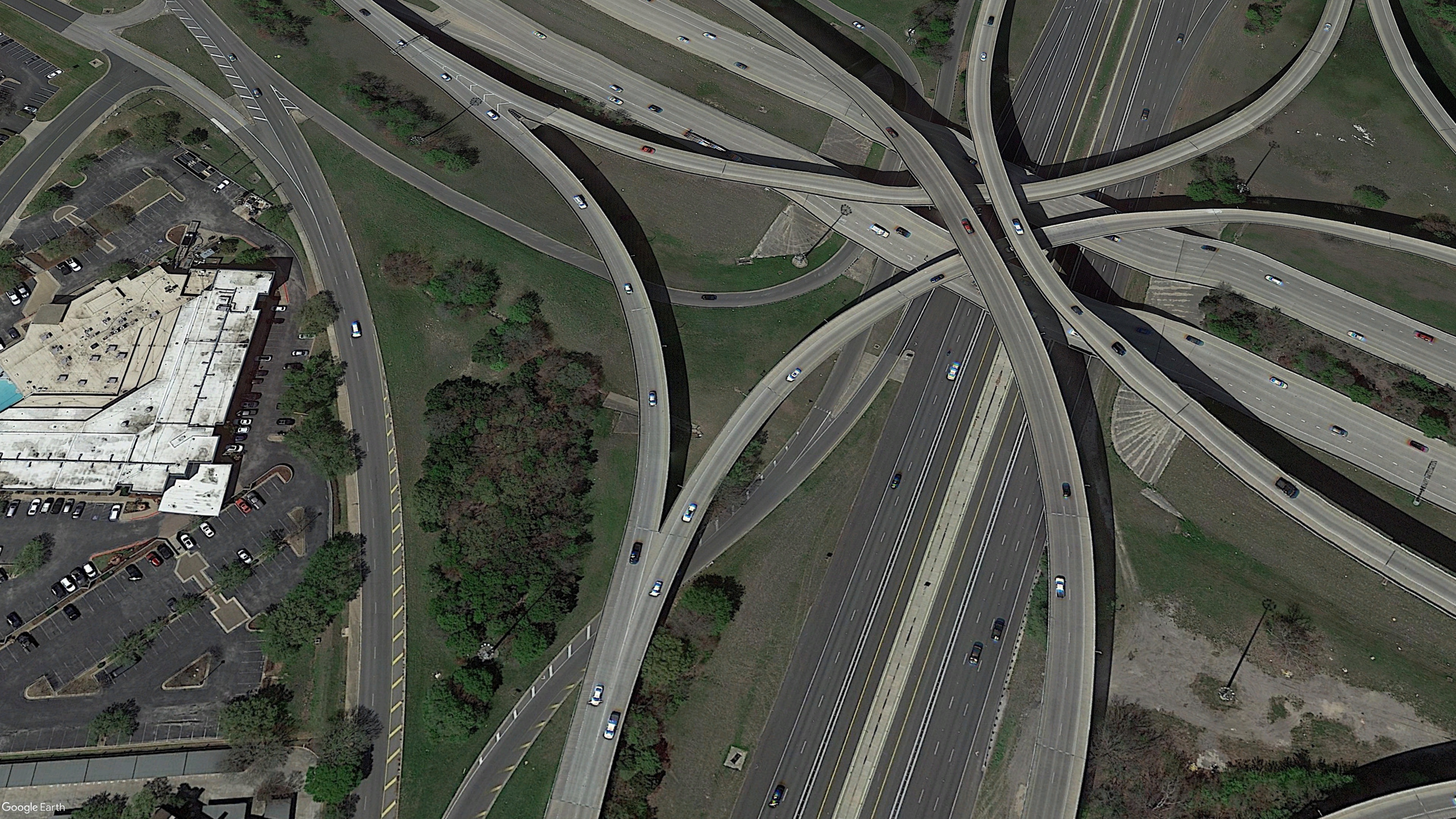
(Direct Connector: Before) - Aerial view of 183 North to MoPAC connection before the construction of the Direct Connector.
-
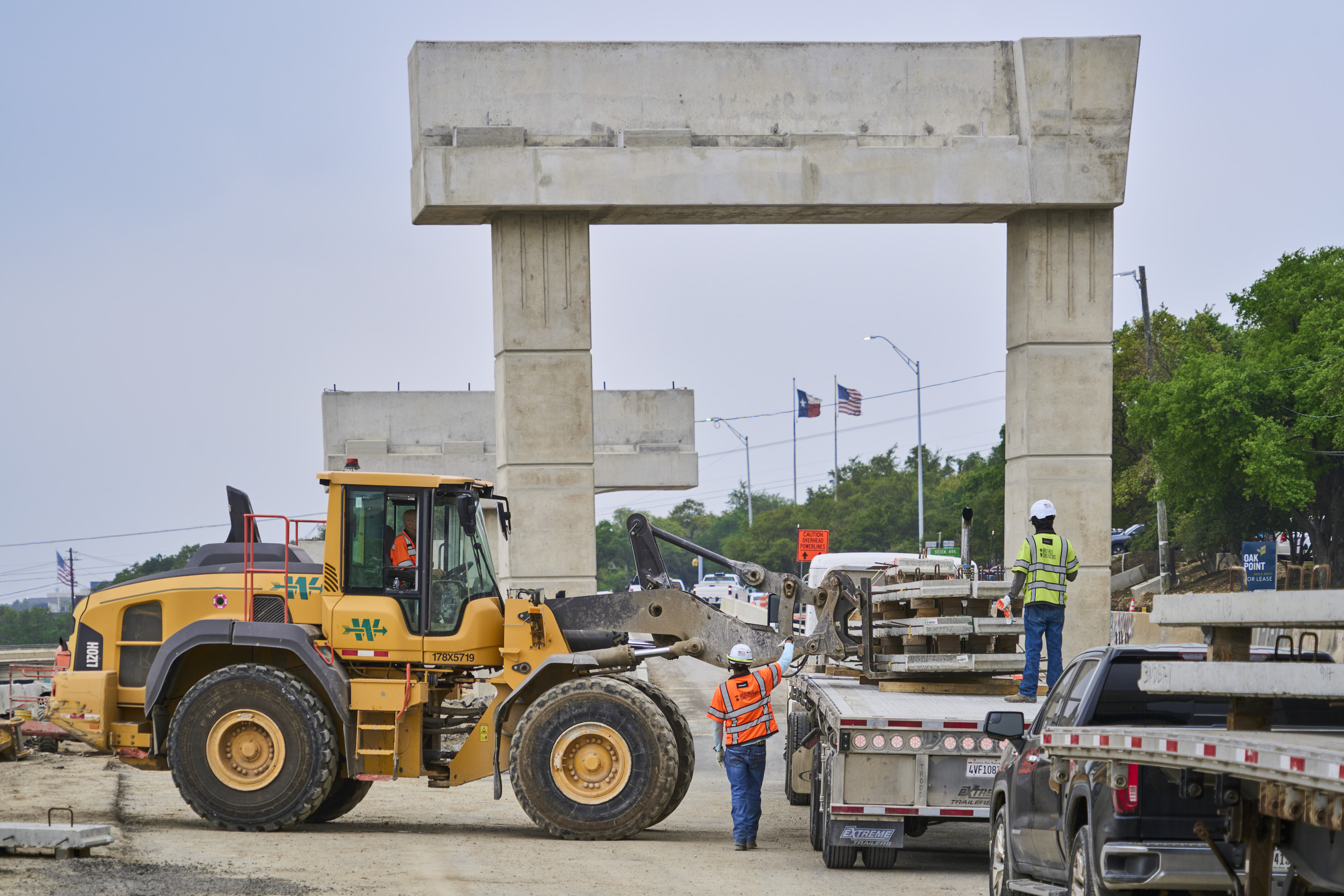
(Direct Connector: During - Bridge Supports) - Ground-level view of the future direct connector location on the 183 North Mobility Project. Existing roadway infrastructure, vehicles, and open construction staging areas are visible around bridge support structures. The photo documents early conditions during installation of the elevated direct connector.
-
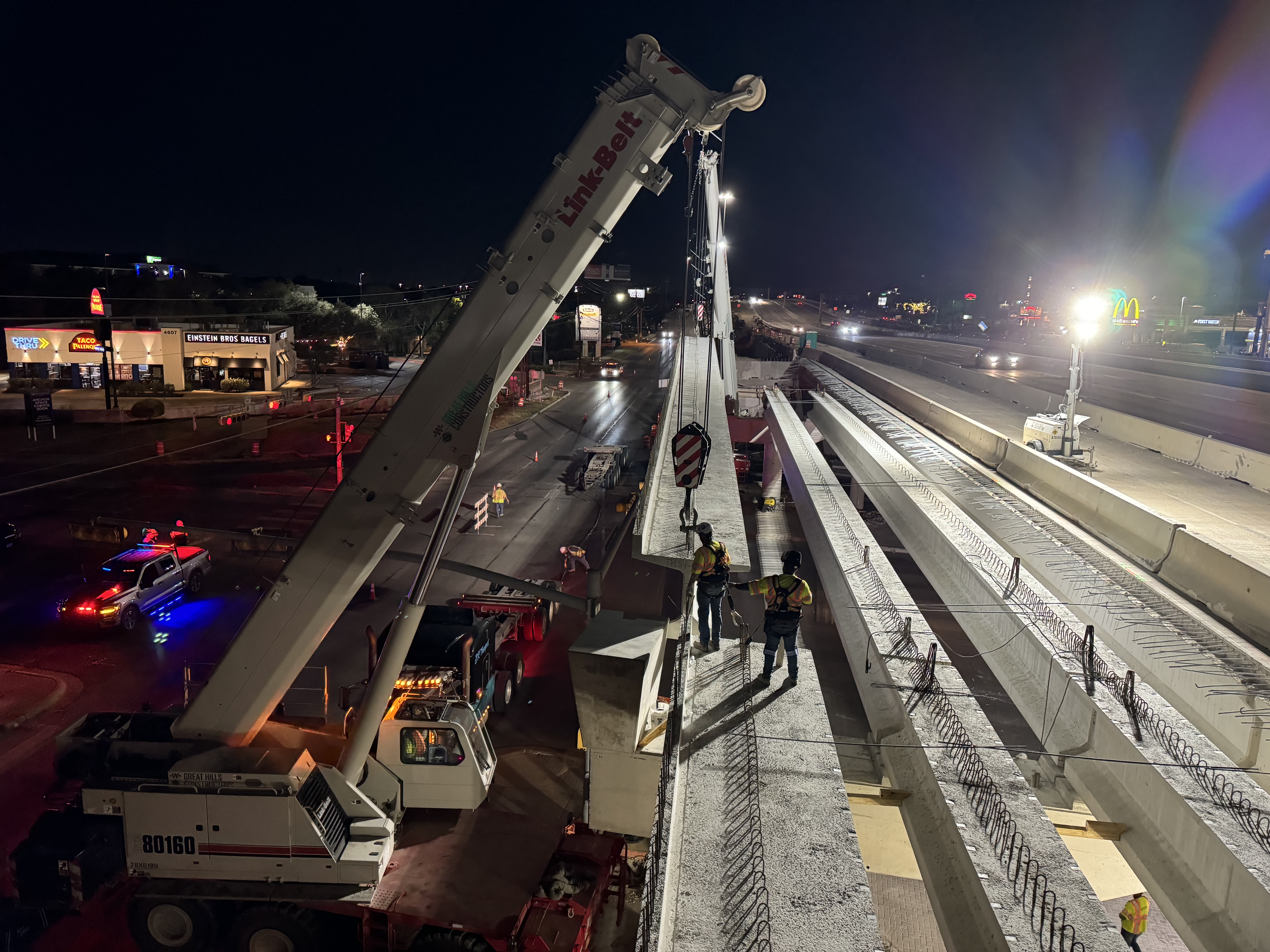
(Direct Connector: During - Bridge Beams) - Nighttime construction of the direct connection bridge on the 183 North Mobility Project. A large crane lifts a precast concrete bridge beam into position while workers guide the beam for the elevated structure. Temporary lighting illuminates the active work zone.
-
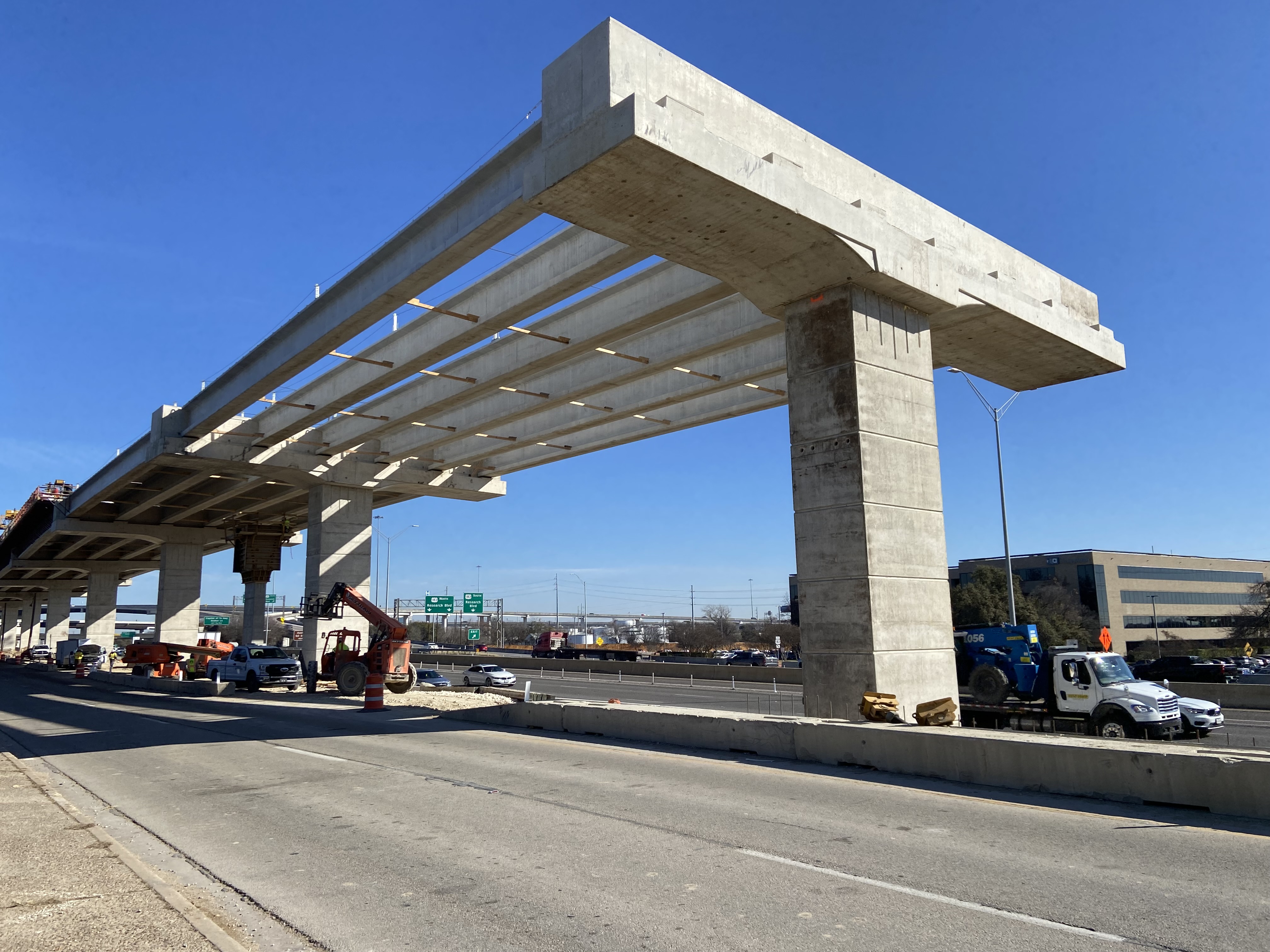
(Direct Connector: During - Installed Columns & Beams) - Daytime view of the direct connector under construction along the 183 North Mobility Project. Massive concrete columns support the newly installed bridge beams above the roadway, while construction equipment operates below. The photo illustrates a major phase in development of the direct connector structure.
-
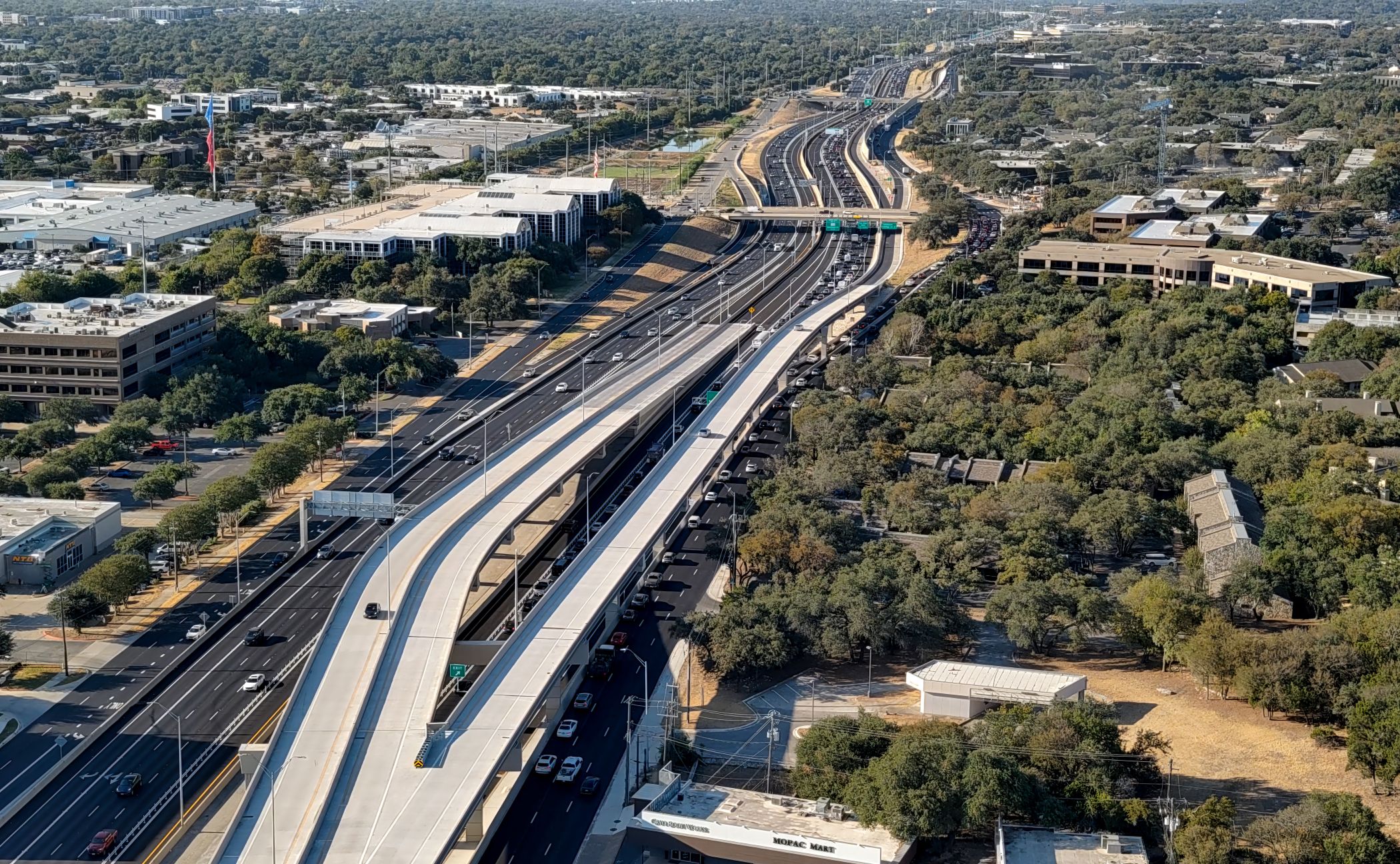
(Direct Connector: After - Collector-Distributor Roads ) - Wide aerial view of the completed 183 North Mobility Project showing elevated direct connector ramps extending through the center of the corridor above multiple highway lanes. Collector-distributor roads run parallel to the main roadway, providing access to entrances, exits, and connecting roadways. Vehicles travel across several levels of completed infrastructure surrounded by office buildings, commercial properties, and dense tree cover.
-
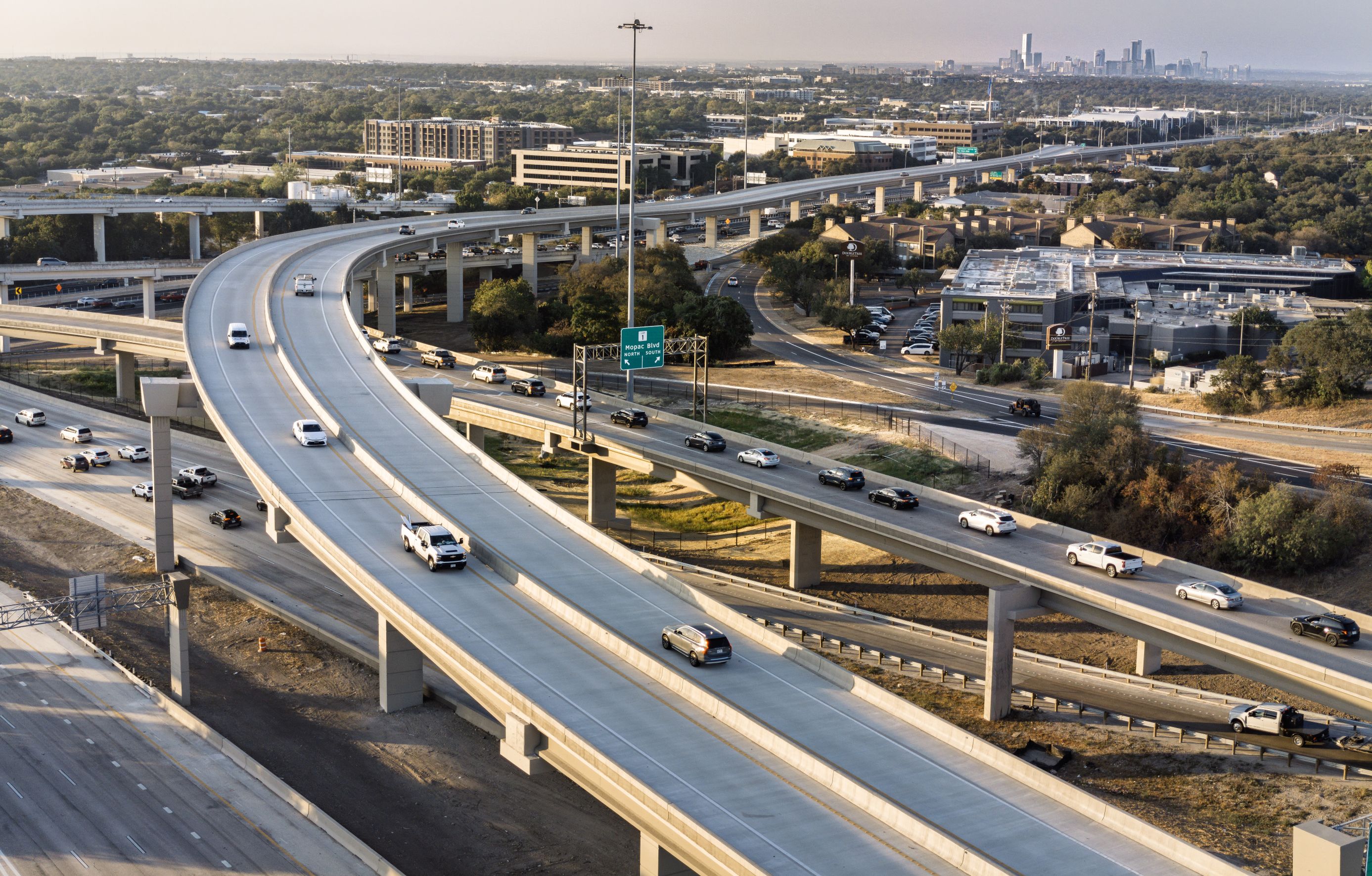
(Direct Connector: After - Direct Connector) - Aerial view of the completed direct connector on the 183 North Mobility Project. Elevated ramps carry traffic above the main highway lanes, providing direct connection within the interchange. Vehicles travel on multiple levels of infrastructure, with surrounding office buildings, frontage roads, and landscaped areas visible throughout the corridor.