 183 North
 Welcome to the 183 Express Lanes information hub. Here you'll find everything you need to know about the opening of the express lanes, the eventual completion of the entire project, and navigating the changes to get the most out of the new and improved US 183.
The 183 North Mobility Project has reached a major milestone with the completion of all three phases of its express lanes opening along US 183 between SH 45 and MoPac.
A Driver's Perspective
Before your first drive, get an idea of what the 183 Express Lanes look like from a driver's point of view.
- Phase I introduced the first northbound express lanes in the center of US 183, giving drivers an early option to bypass congestion.
- Phase II added the northbound direct connector to the MoPac Express Lane, creating a more reliable link between two major roadways.
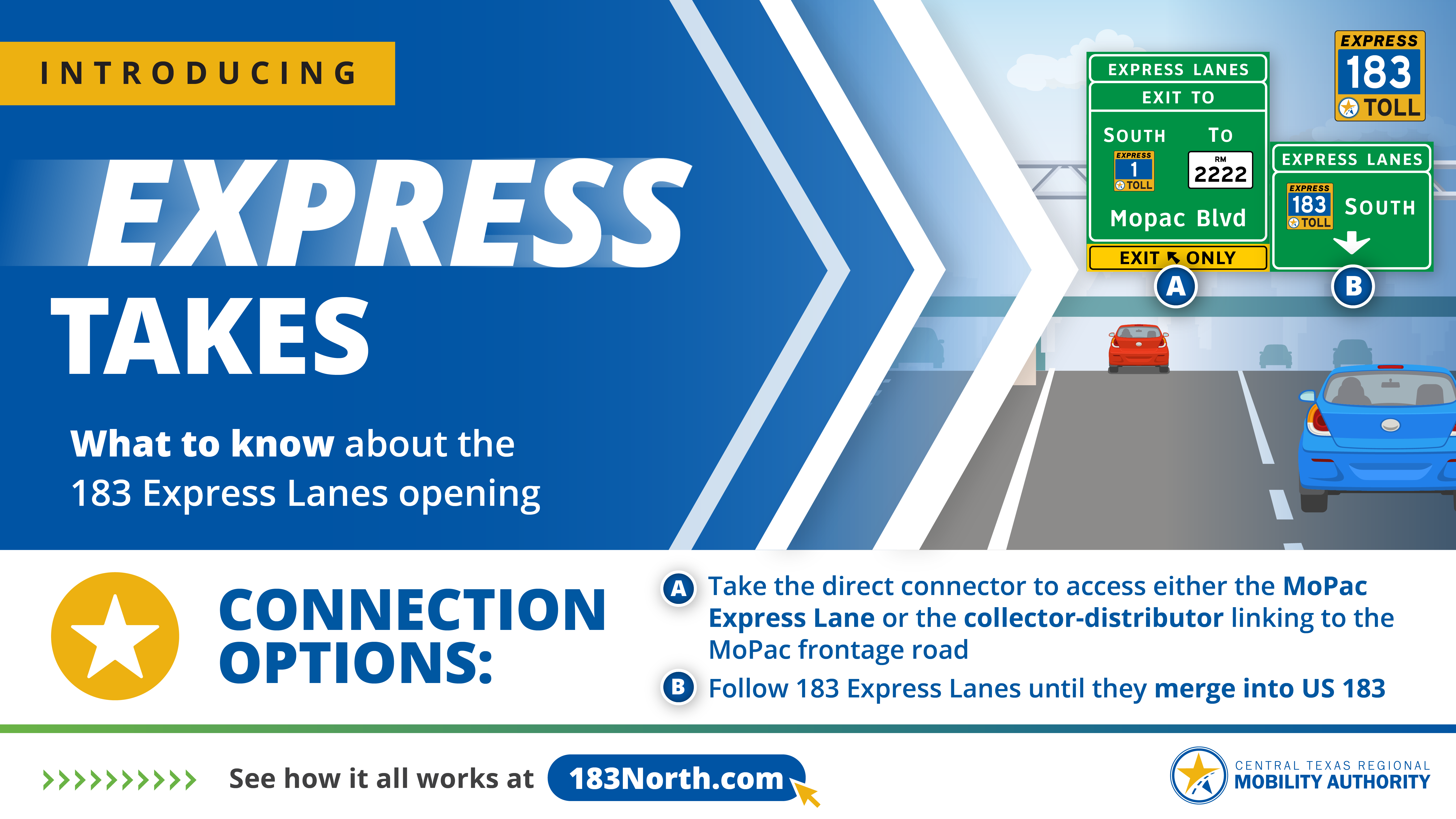
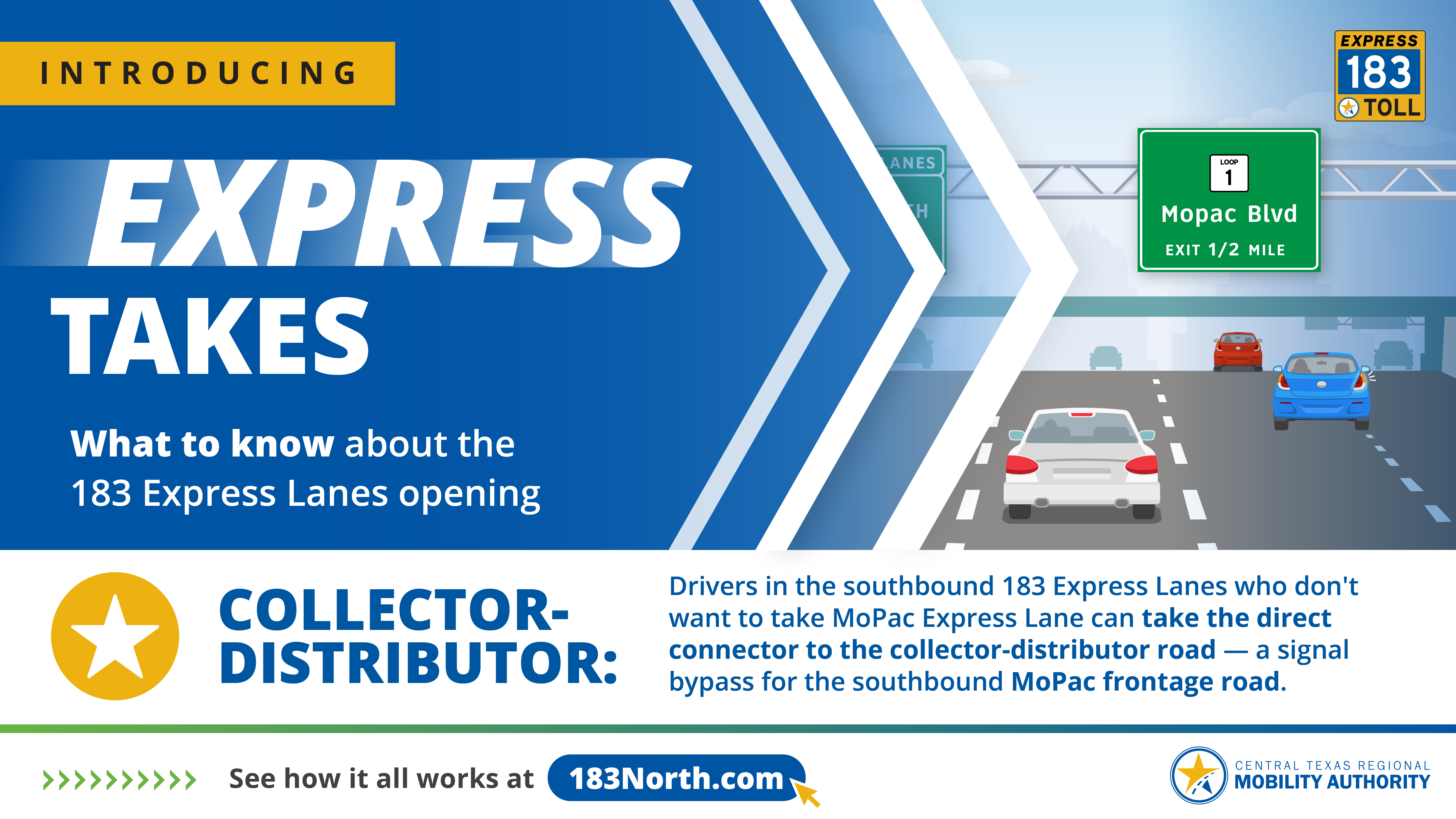
- Phase III opened the remaining southbound express lanes and southbound connections to MoPac. With all phases now operational, the project delivers two express lanes and four non-tolled lanes in each direction of US 183, as well as a direct connector to and from the MoPac Express Lane with a collector-distributor road (signal bypass) along the southbound MoPac frontage road. These key improvements bring more travel reliability and overall improved mobility for this highly trafficked Northwest Austin corridor and provides a key link for drivers wishing to travel between downtown Austin and north to Cedar Park, Leander and beyond.
WATCH: Take a look at the video below, which guides you through the ins and outs of entering and exiting the northbound 183 Express Lanes.
WATCH: Take a look at the video below, which guides you through the ins and outs of entering and exiting the southbound 183 Express Lanes.
Express Takes
Key things to know as the northbound 183 Express Lanes are now open.
Express Takes
-
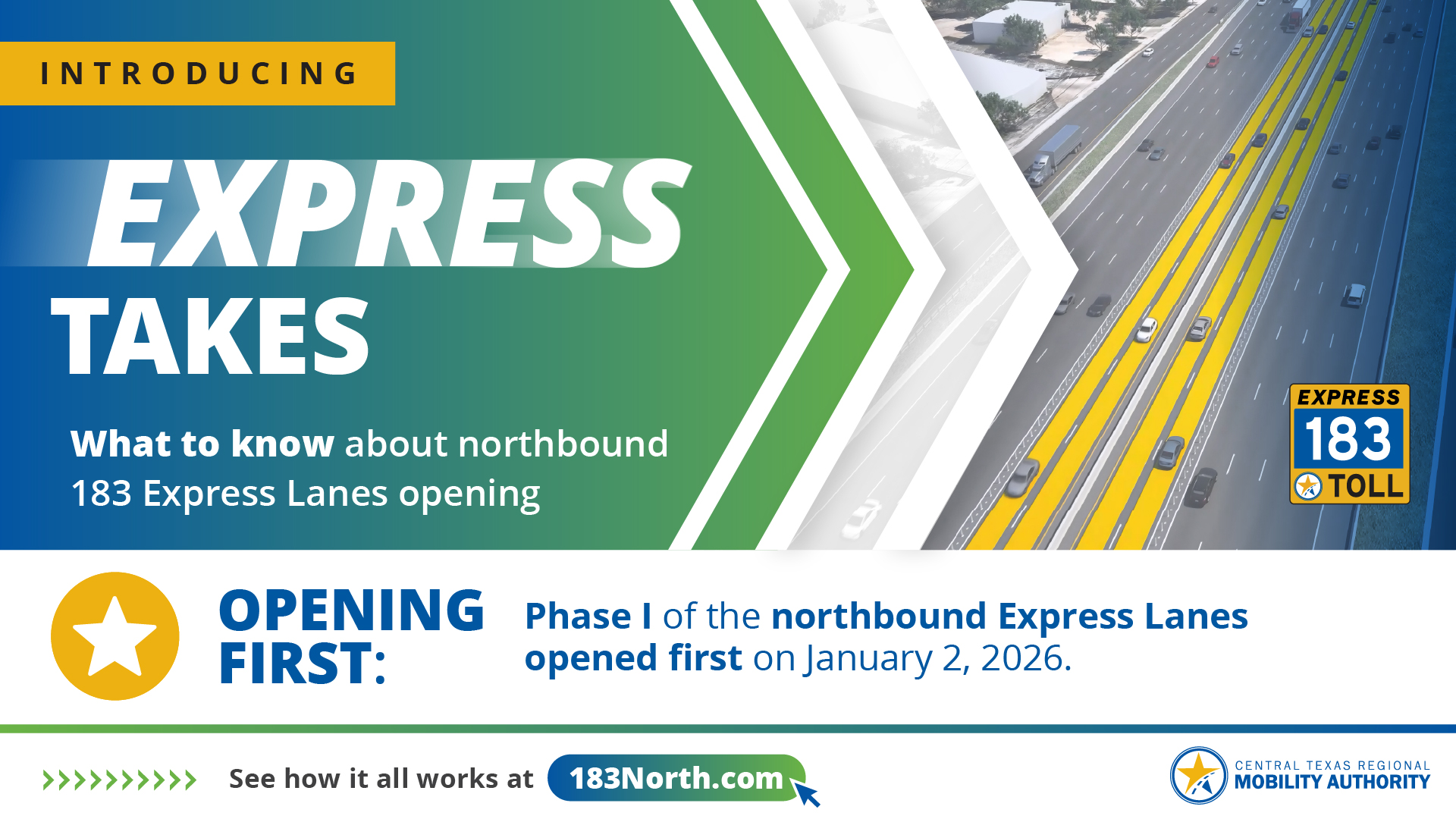
The northbound 183 Express Lanes opened first on January 2, 2026.
-
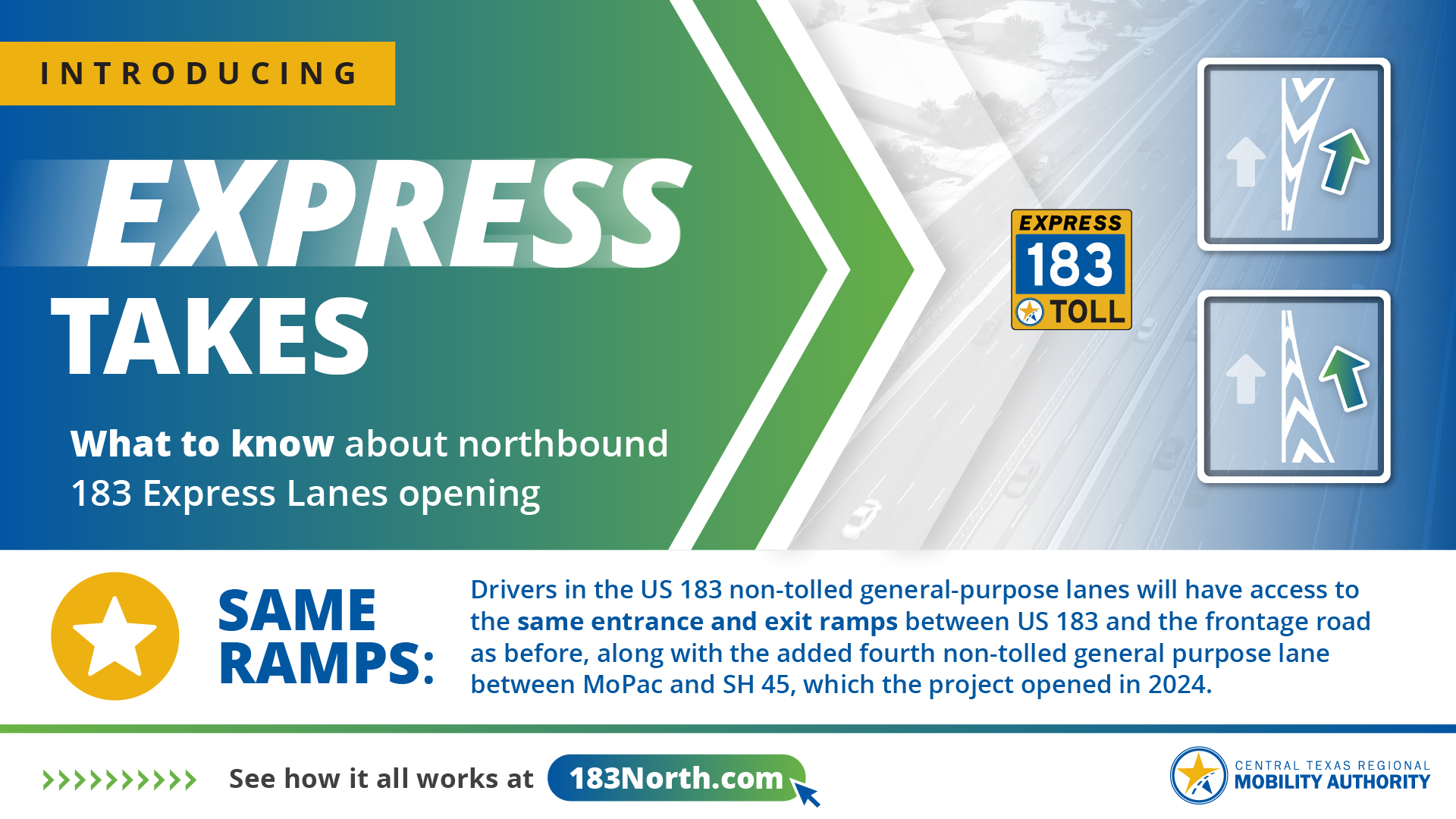
Drivers in the US 183 non-tolled general-purpose lanes will have access to the same entrance and exit ramps between US 183 and the frontage road as before, along with the added fourth non-tolled general purpose lane between MoPac and SH 45, which the project opened in 2024. Prior to the express lanes opening, non-tolled traffic will be shifted to the outside four lanes. The two new express lanes in the center of US 183 will be separated from non-tolled traffic by delineators. Barrels will block off the entrances to the new express lanes until the day it opens.
-
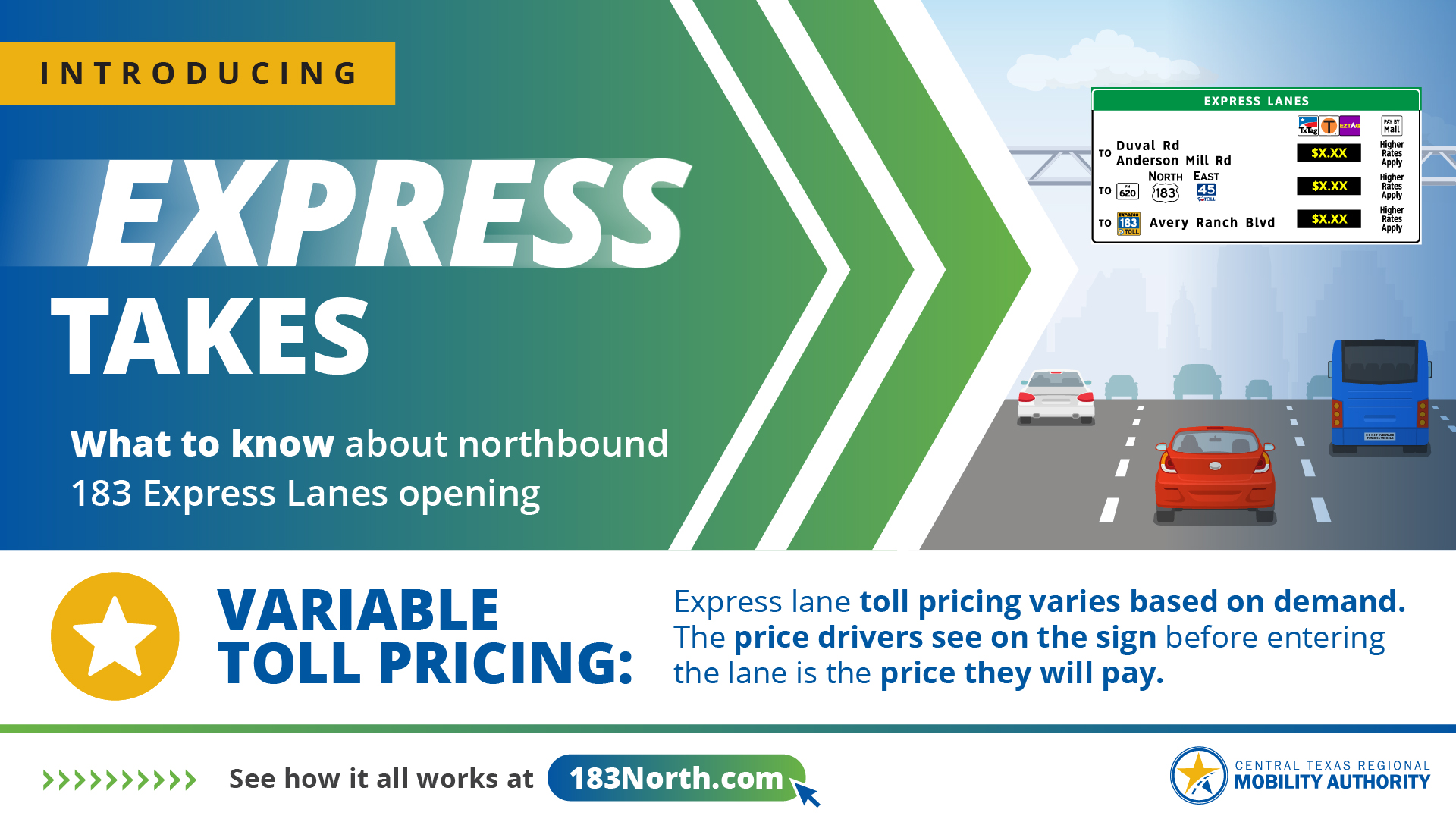
Express lane toll pricing varies based on demand. The price drivers see on the sign before entering the lane is the price they will pay.
-
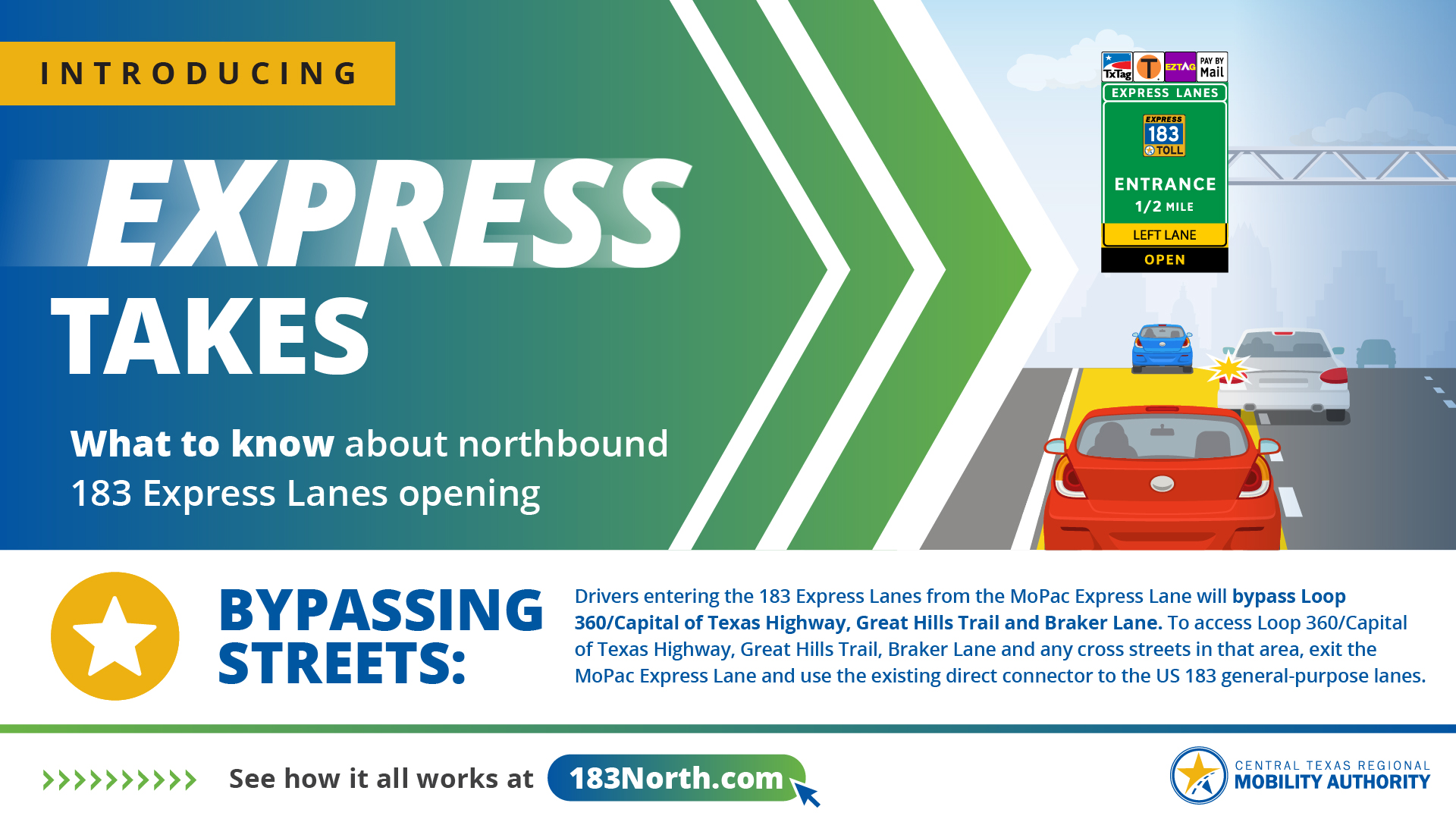
Drivers entering the 183 Express Lanes from the MoPac Express Lane will bypass Loop 360/Capital of Texas Highway, Great Hills Trail and Braker Lane. To access Loop 360/Capital of Texas Highway, Great Hills Trail, Braker Lane and any cross streets in that area, exit the MoPac Express Lane and use the existing direct connector to the US 183 general-purpose lanes.
-
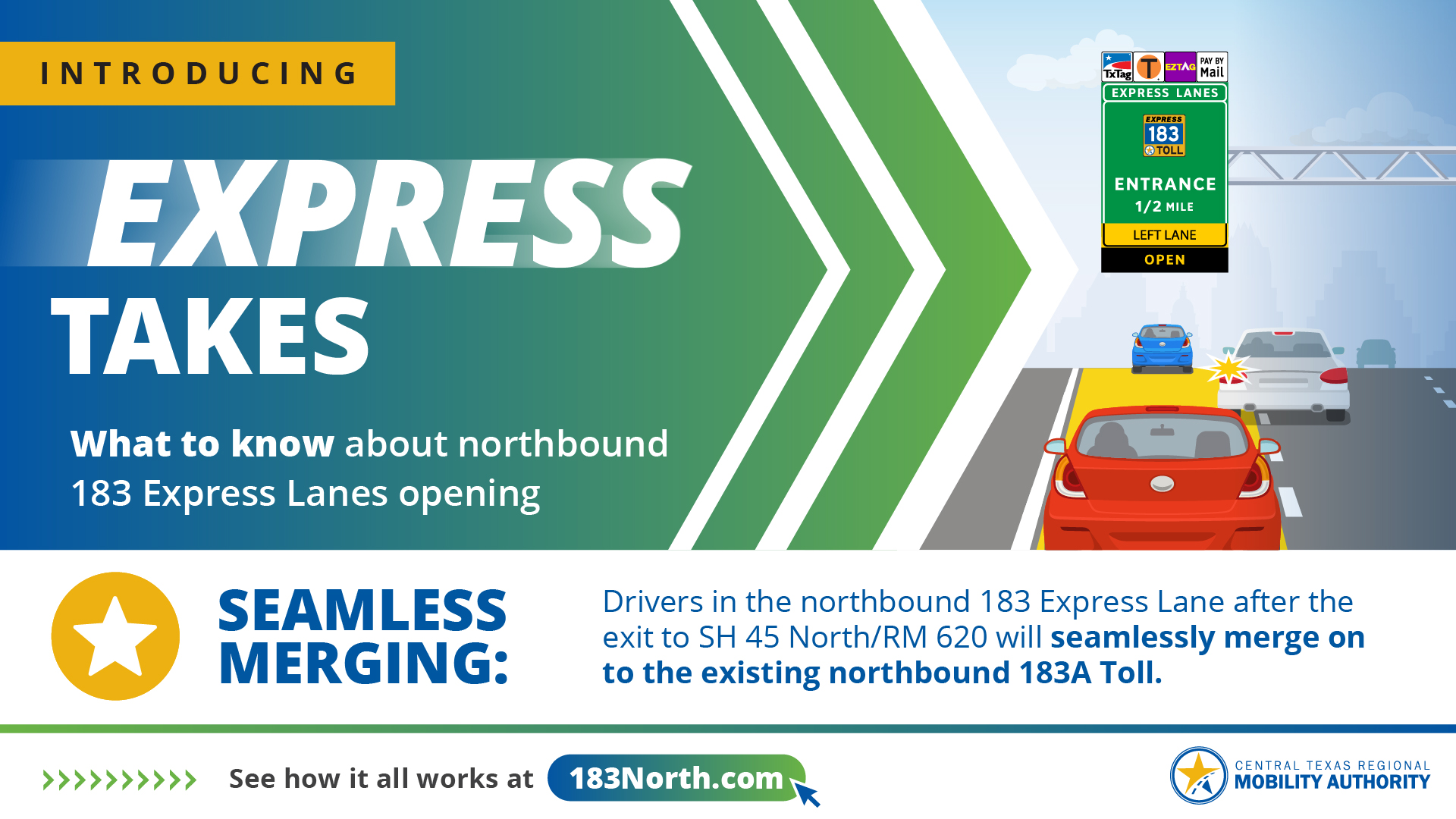
Drivers in the northbound 183 Express Lanes after the exit to SH 45 North/RM 620 will seamlessly merge on to the existing northbound 183A Toll.
-
-
-
How to Use the 183 Express Lanes
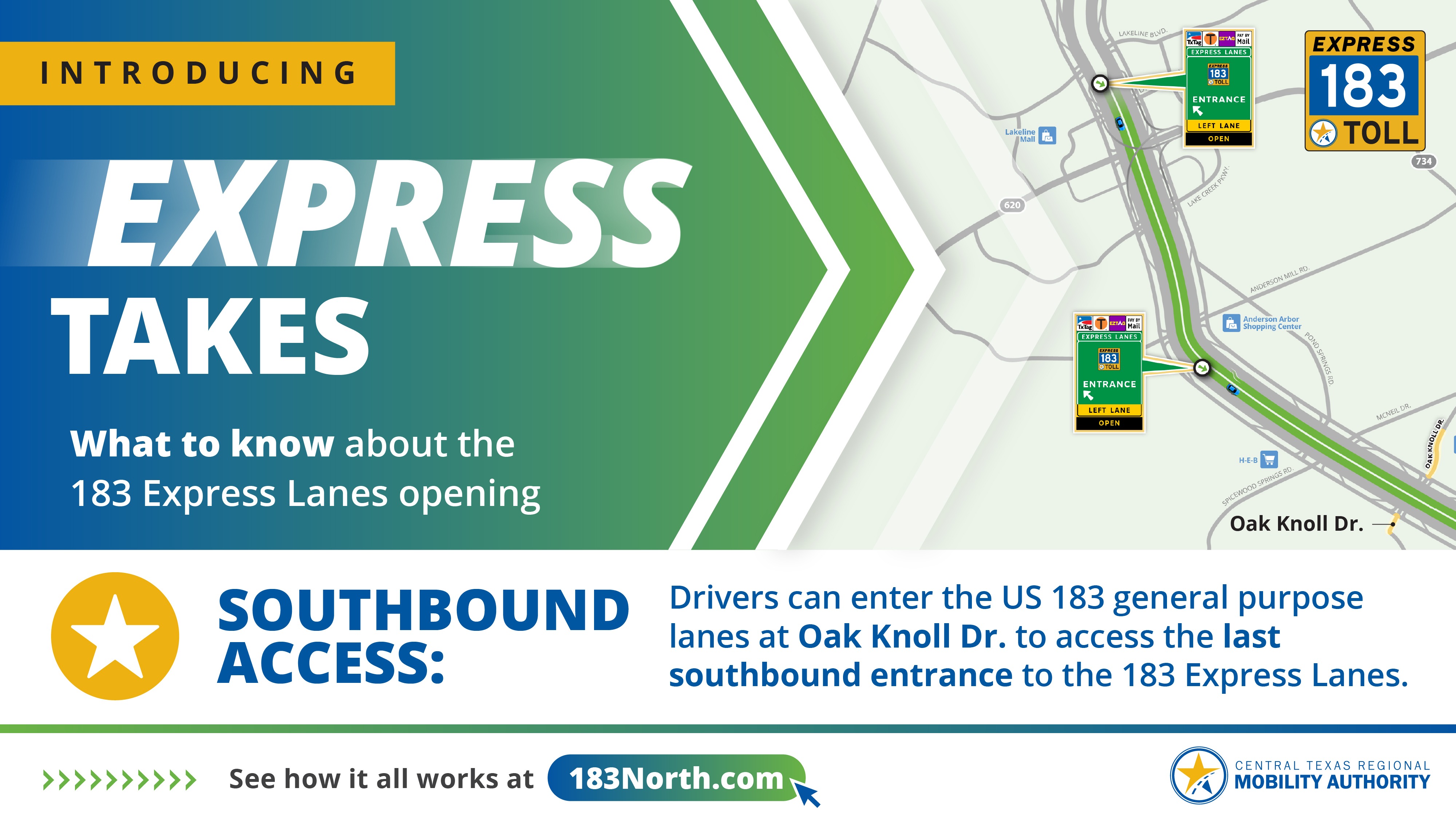
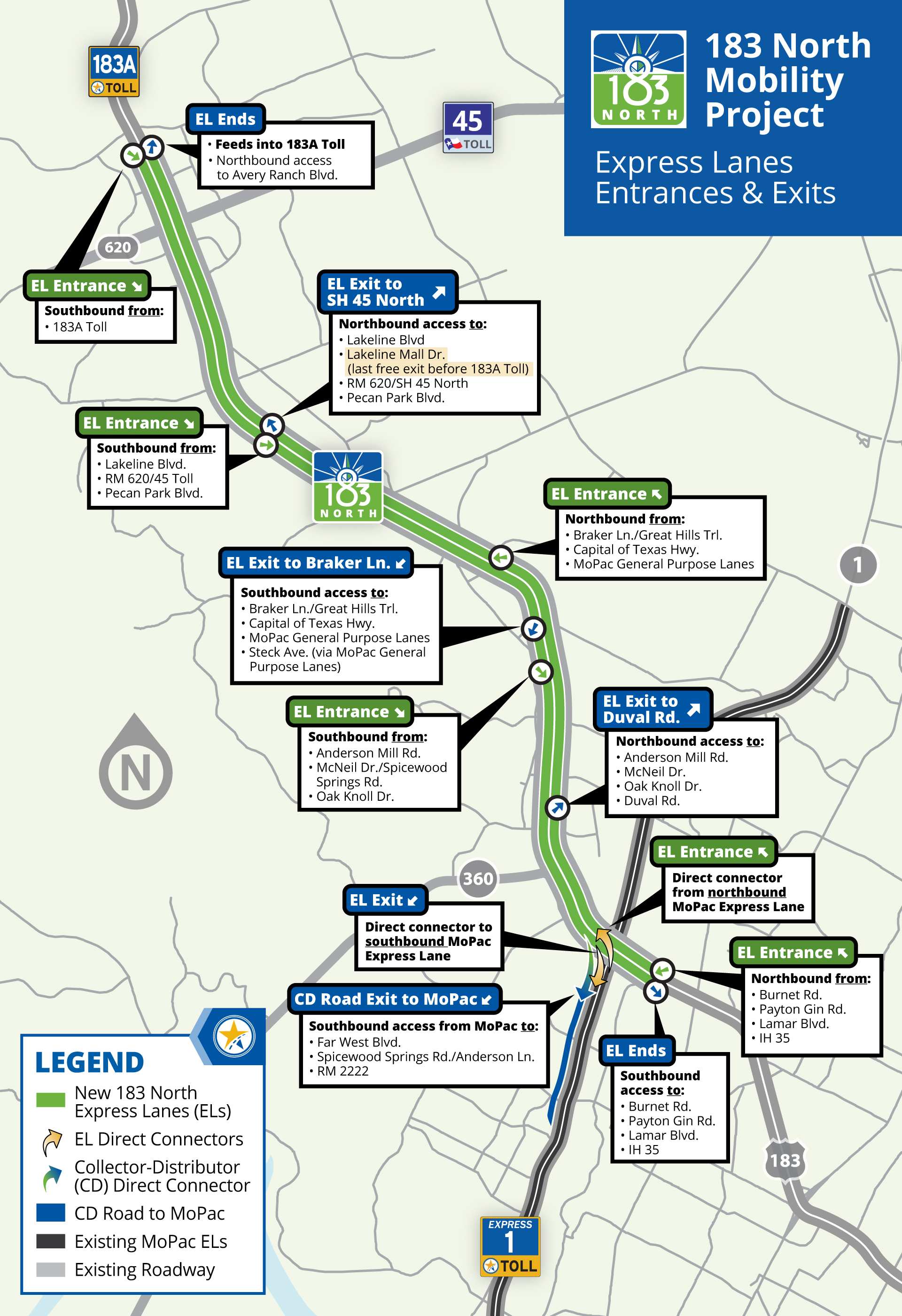
View the full map of entrances and exits here.
Interactive Map
Click on an arrow to learn about 183 Express Lanes Access. Use your scroll wheel or the "+" and "-" buttons on the map to zoom in and out. Click and drag to move map position.

Frequently Asked Questions
Construction of the 183 North Mobility Project aims to benefit the entire community. This includes those who live or work in the corridor, or those who simply travel through.
Multimodal improvements will benefit those who walk or bike along the corridor.
The added non-tolled lane miles will benefit those who choose not to take the express lanes, as will the reduced capacity created by those who do choose to do so.
The express lanes and added efficiency between US 183 and MoPac will benefit drivers who choose to take the 183 Express Lanes when they simply cannot be late.
It will also benefit transit operators and users, as well as emergency responders and the people who need them to arrive quickly on the scene.
The 183 Express Lanes are anticipated began opening in early 2026. The northbound express lanes from near Burnet Rd. to SH 45 North opened first on January 2, 2026, and was followed by the northbound direct connector from the MoPac Express Lane on Jan. 31, 2026.
The southbound express lanes and southbound direct connector to MoPac are anticipated to open within a few months from the opening of the northbound direction.
There will still be other miscellaneous tasks that the crew is finishing up to achieve final completion of the entire project, such as landscaping, finalization of sidewalks and other features etc., throughout the spring and summer of 2026 (and possibly later).
The majority of the infrastructure and mobility improvements coming as a part of this project are already complete.
The 4th non-tolled general-purpose lane was delivered earlier than planned (August 2024) in the project schedule to help ease congestion on the corridor, and the public has been enjoying that lane for over a year now. This lane will remain available, though it will shift to the right in the final configuration.
High mast lighting was installed early on in the project, improving safety and visibility throughout the corridor.
Plus, the vast majority of sidewalks and connected business driveways have been constructed or rehabilitated to become ADA compliant along the entire 9-mile corridor, improving pedestrian and cyclist mobility.
Central Texas does not receive enough funding from federal and state taxes to pay for all of the transportation improvements that are needed. Tolling entities like the Mobility Authority have the flexibility to fund needed infrastructure improvements by borrowing money to build the facilities and then using the revenue from tolls to repay those loans. Tolling is a user-based fee, similar to fees charged for the use of other public facilities such as parking garages, public buses and recreational facilities. User fees differ from taxes, because you have the choice whether or not to use the toll facility, and you receive a specific service in exchange for paying the toll. Taxes are not optional. Drivers have the option to take a toll road and pay the toll, or avoid tolls by taking alternate routes, whereas taxes are mandatory and charged to everyone.
A variety of alternatives were considered in great length during the project’s environmental phase. The express lane alternative was determined to best fit the purpose and need of the project and was cleared in April of 2016.
The project includes both tolled and non-tolled improvements to the corridor, and drivers will always have the choice to take the tolled express lanes or the non-tolled general-purpose lanes.
Even if funding was available to construct only non-tolled lanes, latent traffic demand would quickly fill these lanes, and they would become congested like the existing general-purpose lanes on US 183. Therefore, while the project is adding capacity, that alone will not facilitate congestion management or reliability over the long term.
Express lanes are special tolled lanes that are separated from the general-purpose lanes and designed to keep traffic free flowing. They utilize variable toll pricing to manage the amount of traffic in the lanes. Public transit buses, emergency responders, Capital Metro registered carpools and vanpools, MetroAccess vehicles and state and federal military vehicles may always use the express lanes without paying a toll. The same number of non-tolled general-purpose lanes that exist today will remain.
The 183 North Mobility Project will manage the number of cars in the express lanes at any given time using variable toll pricing. When traffic is heavy in the express lanes, demand is high and toll rates increase. When demand is low, toll rates decrease. Higher rates control congestion by discouraging drivers from entering the express lanes and ensures a reliable trip for transit, emergency services vehicles and drivers, when they really need it. Changeable electronic signs display the current rates in real time, so you’ll know the price before you decide whether to enter the lanes. Once you are in the lanes, the price you saw is the price you’ll pay.
The Capital Area Metropolitan Planning Organization (CAMPO) is responsible for developing both short- and long-range transportation plans for our region. These plans identify priority projects, and determine funding plans based on available financing. Only when the Mobility Authority is asked by CAMPO to build a toll project do we take it on. No entity can build roads that are not a part of the regional plan. And before any dirt is turned or a single blade of grass is disturbed, we conduct robust environmental studies to evaluate the effects of a potential project on the human and natural environment. We know that communities make projects better. As such, we proactively seek out feedback in order to learn the needs and expectations of the public before breaking ground. Our exhaustive research is conducted in accordance with the National Environmental Policy Act (NEPA) of 1969, which requires meaningful public involvement in transportation planning and ensures that our natural resources are balanced with new infrastructure development.
Roads are never really paid off. Use of roadways degrades them, and highways need routine maintenance, upgrading and eventual replacement.
A continuous funding stream is needed to maintain the road, and this can only be generated through taxes or tolls.
As regional metropolitan planning organizations (MPOs) add even more projects to their Transportation Improvement Plans, financing must come from either taxes or tolls.
Tolling is not a tax. It’s a user fee collected in exchange for a service. If you don’t use the toll road, you don’t have to pay for it, and pursuant to state law, we never convert a free lane into a tolled lane.
The fact is that there are no free roads. There are only toll-supported roads and tax-supported roads. The main difference is that you only pay for a toll road when you choose to drive on it, while all taxpayers contribute to tax-supported roadways, even the ones they never use.
On the toll roads operated by the Mobility Authority, tolls are waived under state law for:
- Emergency vehicles
- State and federal military vehicles
- Public transit buses
- Capital Metro registered vanpools
- MetroAccess vehicles
The Mobility Authority's policy allows public transit buses such as Capital Metro to drive on the express lanes without paying a toll (and passing this cost onto customers). Because the variable-priced toll in the express lanes would be set at a rate intended to maintain uncongested traffic flow, transit riders would be ensured a reliable trip, even during peak periods, which will make riding transit a viable alternative to driving alone.
The Mobility Authority currently accepts NTTA’s TollTag, HCTRA’s EZ TAG, CCRMA’s Fuego Tag, Kansas Turnpike Authority’s K-Tag, Oklahoma Turnpike Authority’s Pikepass, Florida Turnpike Enterprise’s SunPass, E-470’s ExpressToll, and BancPass/PlusPass. The Mobility Authority also accepts TxTag which is now operated by HCTRA. The Mobility Authority is continuously working to become interoperable with other agencies.
Drivers who don’t have a tag account will still be able to use the tolled lanes and will be billed through the Mobility Authority’s Pay By Mail program. Cameras will capture a photo of the vehicle’s license plate and a toll bill will be mailed to the address on file with the Department of Motor Vehicles.